
How To Remove Ink Stains From Clothes: Easy Step-By-Step Guide
Introduction
Have you ever found a big blue blotch on your shirt pocket or a black streak on your jeans after a pen accident? How do you remove ink stains from clothes without damaging the fabric?
The short answer: Blot the stain immediately, use rubbing alcohol, vinegar, or other household remedies to lift the ink, and wash with cold water. The quicker you act, the better your chances of saving your clothes.
Ink stains may look permanent, but with the right methods, most can be removed or at least significantly reduced. This guide will show you step-by-step instructions, practical hacks, and fabric-specific solutions so you can tackle ink stains with confidence.
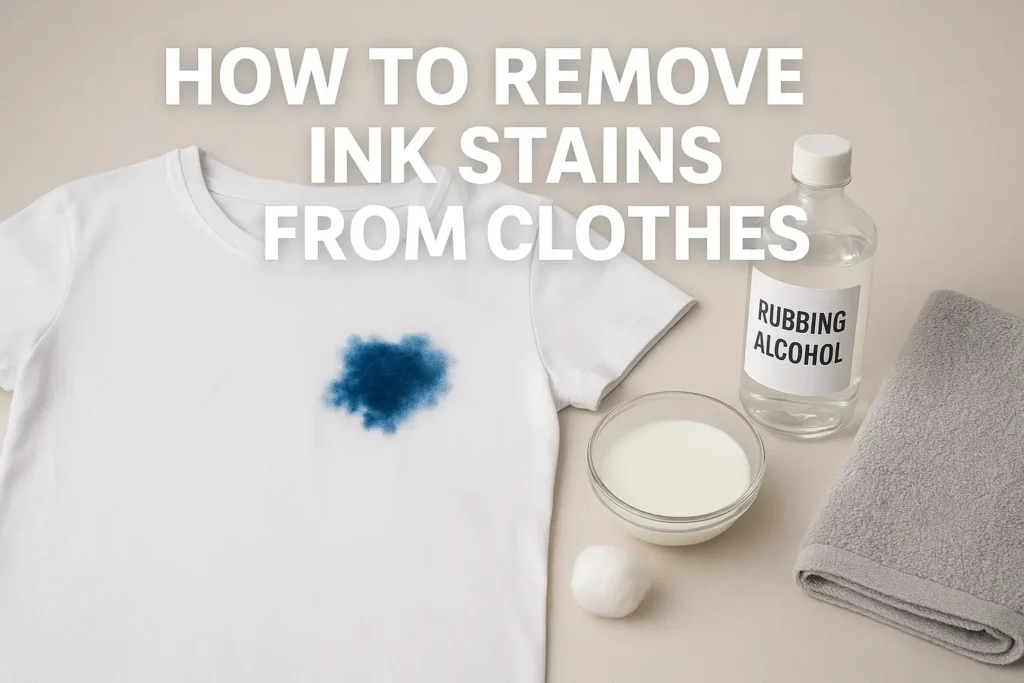
Why Ink Stains Are So Difficult To Remove
Ink is designed to be long-lasting—it contains pigments, dyes, and sometimes oils or alcohols. While this makes it perfect for writing, it also means ink binds quickly to fabric fibers.
Factors that make ink stains challenging:
- Type of ink: Ballpoint ink is oily, gel ink is water-based but heavily pigmented, and permanent marker is dye-rich.
- Fabric type: Natural fibers like cotton absorb ink faster, while synthetic fibers like polyester resist but can still stain.
- Time: Fresh stains are much easier to remove than dried ones.
Step-By-Step Guide: How To Remove Ink Stains From Clothes
Step 1: Act Fast
- As soon as you notice the stain, blot it gently with a clean cloth or paper towel.
- Do not rub, as rubbing spreads the ink deeper into the fibers.
- Place another cloth or towel under the stained area to prevent ink from spreading to other layers.
Step 2: Identify the Ink Type
Different inks need different treatments:
- Ballpoint pen ink (oil-based): Thicker and slower to spread, removable with alcohol-based cleaners.
- Gel pen ink (water-based): More pigmented, requires strong stain removers.
- Fountain pen ink: Water-soluble when fresh but sets quickly when dry.
- Permanent marker: Hardest to remove; requires solvents like alcohol or acetone.
Step 3: Pre-Treat the Stain
Before using any solution, always test on a hidden spot to avoid damage.
Step 4: Cleaning Solutions for Ink Stains
Here are the most effective treatments you can try at home:
1. Rubbing Alcohol (Best for most fabrics)
- Place the fabric stain-side down on a towel.
- Dip a cotton ball or cloth in rubbing alcohol.
- Dab the back of the stain until ink begins to lift.
- Rinse with cold water.
- Repeat if necessary.
Why it works: Alcohol dissolves ink pigments and prevents them from setting.
2. Hairspray (For synthetic fabrics like polyester)
- Spray directly on the stain.
- Let it sit for 5 minutes.
- Blot with a clean cloth.
- Rinse with cold water.
Tip: Choose a hairspray with high alcohol content for best results.
3. Milk Soak (Gentle method for delicate fabrics like silk or wool)
- Pour milk into a bowl and submerge the stained area.
- Leave overnight.
- Rinse and wash gently.
Why it works: The proteins in milk help break down ink pigments without harming delicate fibers.
4. Vinegar + Baking Soda (Natural remedy)
- Apply white vinegar to the stain.
- Sprinkle baking soda on top.
- Let it fizz for 10 minutes.
- Scrub gently with a toothbrush.
- Rinse with cold water.
Why it works: Vinegar loosens pigments while baking soda acts as a mild abrasive.
5. Dish Soap + Ammonia (For stubborn stains)
- Mix 1 tablespoon of dish soap with 2 teaspoons of ammonia in a cup of warm water.
- Apply to the stain with a sponge.
- Let it sit for 30 minutes.
- Rinse and wash normally.
6. Commercial Stain Removers (For tough ink)
- Products like OxiClean, Shout, Vanish, or Tide Stain Remover Pens are excellent.
- Follow manufacturer instructions carefully.
- Repeat if the stain remains after the first wash.
Step 5: Wash the Garment
- Wash the fabric in cold water with laundry detergent.
- Avoid hot water—it can set the ink permanently.
- Air-dry instead of using a dryer. Heat can make stains harder to remove.
Special Fabric-Specific Tips
Cotton & Linen
- Rubbing alcohol works well.
- Blot instead of scrubbing to avoid spreading.
Polyester & Blends
- Use hairspray or rubbing alcohol.
- Avoid bleach—it can damage the fabric.
Silk & Wool
- Use a milk soak or take to a dry cleaner.
- Avoid harsh chemicals that may damage delicate fibers.
Denim
- Apply rubbing alcohol multiple times.
- For darker denim, some mild fading may occur.
White Clothes
- Use rubbing alcohol or a bleach pen (test first).
- Wash separately to prevent ink transfer.
Practical Hacks for Everyday Life
- Carry a stain remover pen (like Tide-to-Go) for emergencies.
- Keep rubbing alcohol at home—it’s useful for many stains, not just ink.
- Blot from the outside in to prevent stain spreading.
- Never dry before stain removal—heat sets stains permanently.
- For uniforms or kids’ clothes, pretreat ink stains weekly to prevent buildup.
Frequently Asked Questions (FAQs)
1. Can dried ink stains still be removed?
Yes, but it’s more difficult. Use rubbing alcohol or a commercial stain remover, and repeat the process if needed.
2. Does toothpaste remove ink stains?
Yes, non-gel white toothpaste can work on small stains. Apply, rub gently, rinse, then wash.
3. Is vinegar safe on all fabrics?
Vinegar is safe on most fabrics, but test on delicate materials first. Avoid soaking silk in vinegar.
4. Can baking soda alone remove ink?
Baking soda works best when combined with vinegar or detergent. Alone, it may not fully lift ink.
5. Should I use hot or cold water?
Always use cold water. Hot water makes stains permanent.
6. What if none of these methods work?
For stubborn ink on delicate or expensive fabrics, take the garment to a professional dry cleaner.
Final Thoughts
Ink stains can feel like a clothing disaster, but they don’t have to be permanent. With quick action, the right household remedies, and patience, you can rescue most fabrics.