How To Clean Pet Urine: Step-by-Step Guide for Fresh Homes
Introduction
Have you ever walked into your living room and noticed a strong, unpleasant smell of pet urine? It’s one of the most frustrating problems pet owners face. Whether it’s a puppy in training, an older dog with bladder issues, or a cat that had an accident, pet urine is never fun to deal with.
Quick solution: Blot the spot immediately, use an enzymatic cleaner (or a vinegar and baking soda mix), and repeat until the stain and odor are completely gone.
In this comprehensive guide, you’ll learn exactly how to clean pet urine from different surfaces, why it’s so important to do it correctly, and practical tips to prevent repeat accidents.
Why Cleaning Pet Urine Properly Matters
When pets urinate indoors, it’s more than just an inconvenience. Here’s why you should act quickly and clean properly:
- Odor lingers for weeks if not cleaned fully. Pets also have stronger noses than humans, so even a tiny trace encourages them to pee again in the same spot.
- Stains become permanent if the urine seeps deep into carpets or fabrics.
- Bacteria growth and health risks: Pet urine contains ammonia and proteins that can lead to bacterial buildup, causing respiratory irritation and even mold growth.
- Damage to floors: Hardwood floors can warp, and carpets can weaken if urine isn’t removed completely.
Bottom line: Cleaning pet urine the right way keeps your home fresh, prevents future accidents, and protects your family’s health.
Step-by-Step Guide: How To Clean Pet Urine
Step 1: Act Quickly
The sooner you start cleaning, the easier it is to stop urine from soaking deep into carpet padding or upholstery.
- Use paper towels or absorbent cloths to blot the urine.
- Do not rub, as this spreads the stain further.
- If it’s a large puddle, stand on the towel to press out more liquid.
Step 2: Locate the Full Area
Pets often leave more than one spot, or you may miss part of the stain.
- Use your sense of smell to track the odor.
- A UV blacklight works best—urine glows under it, revealing hidden stains on carpets and floors.
Step 3: Choose Your Cleaning Solution
There are two main approaches:
- Enzymatic Cleaners (Best Choice):
- Specially designed to break down proteins in urine.
- Removes both stains and odors.
- Available in most pet stores.
- DIY Vinegar & Baking Soda Mix:
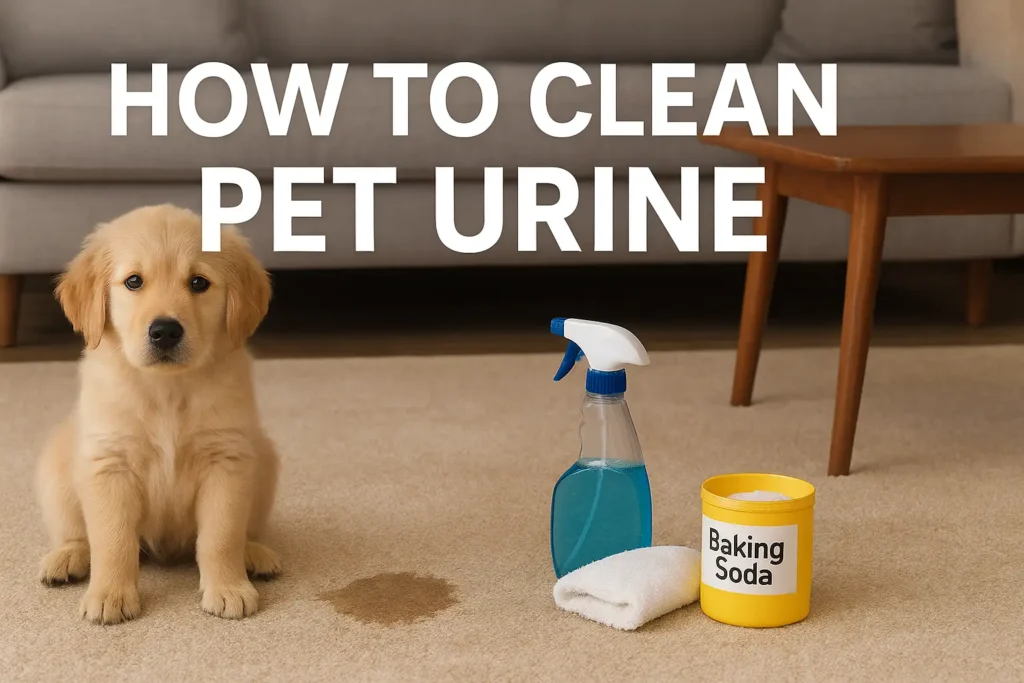
- Mix 1 part white vinegar with 1 part water in a spray bottle.
- Spray generously on the spot.
- Once dry, sprinkle baking soda and let it sit overnight. Vacuum the next day.
Avoid ammonia-based cleaners. Since urine contains ammonia, your pet may mistake the smell for their own and pee there again.
Step 4: Cleaning Pet Urine from Carpets & Rugs
- Spray the chosen cleaner until the area is damp.
- Allow it to sit for at least 10–15 minutes to break down urine compounds.
- Blot with a dry towel or cloth.
- For deeper stains, place a towel with a heavy object (like a book) on top overnight.
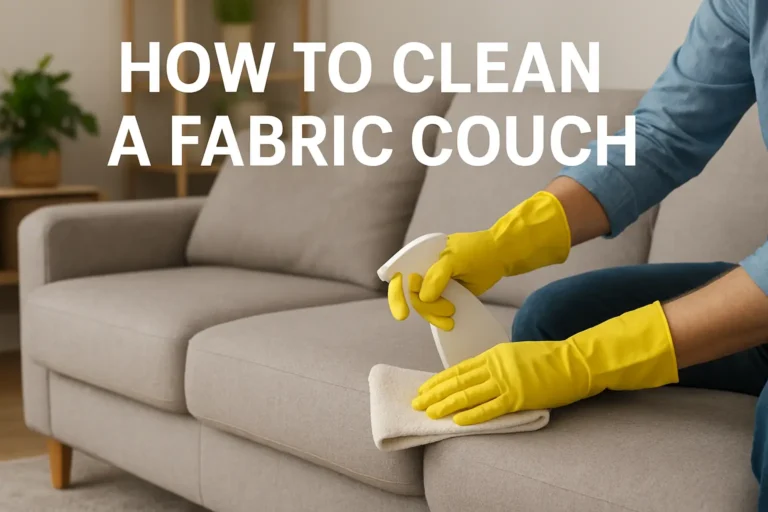
Step 5: Cleaning Upholstery & Fabric Furniture
- Test any solution on a hidden area first to avoid discoloration.
- Apply enzymatic cleaner or vinegar solution.
- Let it sit for 5–10 minutes.
- Blot repeatedly until the stain lightens.
- If odor persists, repeat treatment the next day.
Step 6: Cleaning Hardwood & Tile Floors
- Wipe urine immediately with paper towels.
- Spray with a vinegar and water solution (or enzymatic cleaner safe for wood).
- Rinse with plain water to prevent vinegar from damaging wood finishes.
- Dry thoroughly with a towel.
Step 7: Eliminating Lingering Odors
Sometimes, even after cleaning, the smell remains. Here’s what works:
- Baking soda: Sprinkle over carpets or couches once the spot is dry. Leave overnight and vacuum.
- Activated charcoal bags: Place near the affected area to absorb odors.
- Pet-safe air fresheners: Optional, but never replace deep cleaning.
Extra Tips for Stubborn or Old Stains
Old urine stains are harder to clean but not impossible. Try:
- Hydrogen Peroxide Mix (for light-colored fabrics only):
Mix ½ cup hydrogen peroxide (3%) with 1 teaspoon dish soap. Spray, let sit for 10 minutes, and blot. (Always patch-test first.) - Repeat treatments: Sometimes it takes 2–3 applications to fully remove odors.
- Professional steam cleaners: For deep-set carpet stains, hiring a pro may be the best solution.
Health Risks of Untreated Pet Urine
Leaving pet urine uncleaned can lead to:
- Ammonia exposure: Strong urine odors can irritate lungs, especially for children, elderly, or people with asthma.
- Bacteria & mold growth: Moisture attracts bacteria, and carpets can develop hidden mold.
- Allergies: Lingering urine proteins may cause allergic reactions in sensitive individuals.
Quick cleaning = healthier home for both humans and pets.
How To Prevent Future Accidents
Cleaning is only part of the solution. Here are prevention strategies:
- Regular potty breaks: Especially for puppies or senior pets.
- Train with positive reinforcement: Reward pets when they go outside or in the litter box.
- Keep areas off-limits: Block rooms where accidents commonly occur.
- Clean thoroughly every time: Even a faint odor invites repeat accidents.
- Vet checkups: If accidents are frequent, rule out medical issues.
Real-Life Hacks from Pet Owners
- Old towels vs. paper towels: More absorbent, eco-friendly, and reusable.
- Vinegar rinse in washing machine: Add ½ cup vinegar when washing pet bedding.
- Aluminum foil trick: Cover favorite accident spots temporarily—most pets avoid the texture.
- Pet-safe essential oil spray (optional): A few drops of lavender or lemon oil in water (always confirm oils are safe for your pet).
FAQs About Cleaning Pet Urine
Q1: How do I clean dried pet urine from carpet?
Soak the area with an enzymatic cleaner, let it sit for 15–30 minutes, then blot and repeat until odor is gone. Baking soda helps with lingering smells.
Q2: Can I use bleach to clean pet urine?
No. Bleach doesn’t remove urine odor and can create dangerous fumes when mixed with ammonia in urine.
Q3: What’s the best cleaner for pet urine?
Enzymatic cleaners are the most effective because they break down odor-causing compounds.
Q4: How do I stop my pet from peeing in the same spot?
Thoroughly clean with enzymatic cleaners and keep the area off-limits until the smell is completely gone.
Q5: Are homemade cleaners safe for pets?
Yes, vinegar and baking soda are safe options, but avoid harsh chemicals or essential oils that may be toxic to pets.
Final Thoughts
Dealing with pet urine accidents can feel overwhelming, but with the right steps, you can clean stains and odors effectively. Remember: act fast, use the right cleaners, and never leave traces behind.
By following this guide, your carpets, furniture, and floors can stay fresh—and your pet won’t be tempted to pee in the same spot again.