
How to Clean an Iron: Step-by-Step Guide for a Smooth, Fresh Press
Have you ever wondered why your iron suddenly leaves brown marks, sticky spots, or simply doesn’t glide smoothly anymore? This happens because of mineral deposits, fabric residue, and dirt buildup on the soleplate and inside the steam vents.
So, how to clean an iron quickly and safely?
The easiest way is to use common household items like vinegar, baking soda, and salt to clean both the soleplate and water reservoir.
In this detailed guide, you’ll learn:
- Step-by-step methods for cleaning an iron.
- Hacks for burnt stains and clogged steam vents.
- Pro tips to keep your iron clean longer.
- Answers to common iron cleaning FAQs.
Let’s get started.
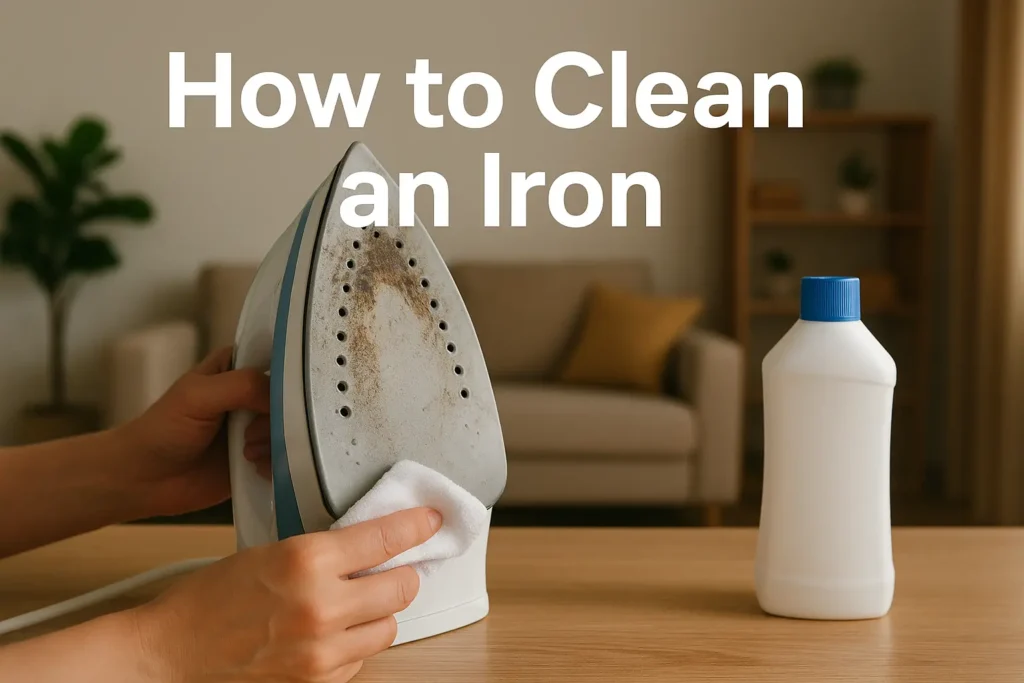
Why Does an Iron Need Cleaning?
Even though irons look tough, they’re actually delicate appliances that can get dirty easily. Here are the most common reasons:
- Hard water deposits – Minerals from tap water collect in steam vents.
- Burnt fabric or starch – Accidentally ironing over synthetic fabrics or starch can leave burnt marks.
- Dust and fibers – Lint sticks to the hot soleplate.
- Residue from ironing sprays – Products like starch or fabric fresheners leave sticky layers.
If not cleaned regularly, this buildup can cause:
- Brown or white stains on clothes.
- Rough soleplate that drags instead of gliding.
- Poor steam output.
- Shortened iron lifespan.
A clean iron = smooth pressing, stain-free clothes, and longer appliance life.
How to Clean an Iron: Step-by-Step
1. Start with the Manufacturer’s Manual
Before anything else, check your iron’s instruction booklet. Some brands (like Rowenta or Philips) may recommend or prohibit specific cleaning solutions. This prevents accidental damage.
2. Cleaning the Soleplate with Baking Soda
The soleplate is the flat metal surface of the iron that contacts your clothes. If it’s dirty, everything else fails.
You’ll need:
- 2 tbsp baking soda
- 1 tbsp water
- Soft cloth or sponge
Steps:
- Mix baking soda with water to form a paste.
- Apply the paste gently over the soleplate (avoid steam holes).
- Wipe clean with a damp cloth.
- Dry with a microfiber towel.
Tip: If residue remains in steam vents, use a damp cotton swab.
3. Cleaning Stubborn Burn Marks with Vinegar
Burnt fabric stains can feel permanent, but white vinegar dissolves them easily.
You’ll need:
- White vinegar
- Soft cloth
- Old towel
Steps:
- Warm vinegar slightly (do not boil).
- Dip cloth in vinegar and rub stained areas.
- For deep stains, soak a towel in vinegar. Place the cold, unplugged iron on it for 30 minutes.
- Wipe clean.
4. Cleaning Steam Holes
Clogged steam vents = weak steam release. Cleaning them restores full power.
You’ll need:
- Cotton swabs
- White vinegar
Steps:
- Dip a cotton swab in vinegar.
- Insert into each steam hole carefully.
- Wipe with a dry cloth.
5. Descaling the Water Reservoir
The inside water tank is often overlooked but crucial. Hard water minerals build up here.
You’ll need:
- White vinegar
- Distilled water
Steps:
- Fill the water tank with 50% vinegar and 50% water.
- Heat the iron on the steam setting.
- Hold over a sink and let it steam for 5–10 minutes.
- Empty the tank and rinse with clean water.
- Steam again with plain distilled water to flush out vinegar smell.
6. Cleaning Burnt Fabric with Salt Method
If synthetic fabric melted onto your iron, salt can gently scrub it off.
Steps:
- Lay paper towel or newspaper on ironing board.
- Sprinkle table salt over it.
- Heat the iron (no steam).
- Run the hot iron over the salt in circles.
- Residue will stick to salt and come off.
7. Toothpaste Hack for Sticky Residue
Believe it or not, toothpaste works well on mild stains.
Steps:
- Spread non-gel toothpaste on the cold soleplate.
- Rub with a soft cloth.
- Wipe off with damp towel.
- Dry completely.
8. Dish Soap for Gentle Cleaning
If your iron isn’t too dirty, dish soap is a quick fix.
Steps:
- Mix a few drops of dish soap in warm water.
- Dip a cloth in the solution.
- Wipe the soleplate.
- Dry with a towel.
Preventing Iron Buildup
Cleaning is great, but prevention is smarter. Here’s how to keep your iron fresh:
- Always use distilled water instead of tap water.
- Empty the water reservoir after every use.
- Store the iron upright (not flat).
- Wipe soleplate occasionally, even if it looks clean.
- Avoid ironing directly over zippers, buttons, or synthetic fabrics at high heat.
FAQs About Cleaning an Iron
1. How often should I clean my iron?
If you iron daily, clean it once a month. For light use, every 2–3 months is fine.
2. Can I use lemon juice instead of vinegar?
Yes, lemon juice also dissolves stains and smells fresher. But vinegar is more effective.
3. What if my iron still smells after cleaning?
Run two full tanks of distilled water through the steam cycle to flush it out.
4. Can I use steel wool on the soleplate?
No. Steel wool scratches the iron permanently. Stick to soft cloths and non-abrasive methods.
5. Why does my iron spit water instead of steam?
This usually happens when the steam vents are clogged with minerals. Descale the reservoir with vinegar.
Final Thoughts
A dirty iron doesn’t just look bad — it can ruin clothes. By following these simple steps with baking soda, vinegar, salt, and toothpaste, you’ll know exactly how to clean an iron safely.