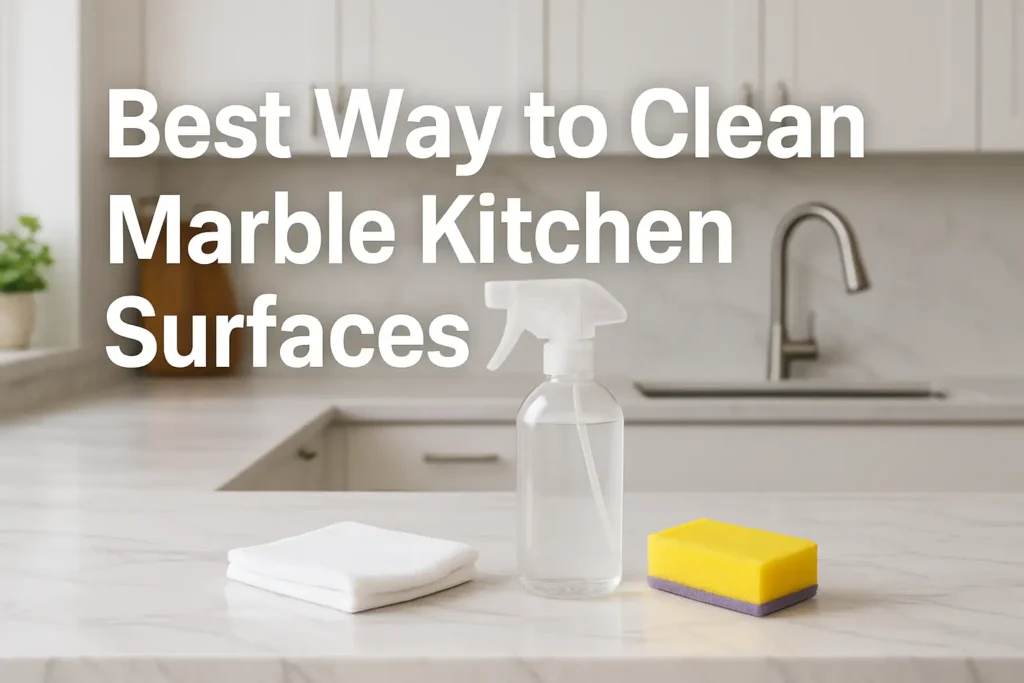
Best Way to Clean Marble Kitchen Surfaces
Have you ever noticed your marble kitchen surfaces looking dull, stained, or scratched and wondered: What’s the best way to clean marble kitchen surfaces without damaging them?
The short answer: use a gentle pH-neutral cleaner (like mild dish soap and warm water) with a soft cloth, avoid acidic cleaners such as vinegar or lemon juice, and regularly seal the marble to keep it protected.
Marble is elegant but also porous and delicate, so it needs special care. Let’s go step by step to keep your marble counters shining safely.
Why Marble Needs Special Cleaning
Marble isn’t like granite or quartz. It’s softer, more porous, and sensitive to acids and abrasive cleaners.
- Acidic substances (vinegar, citrus, tomato, wine) can etch the surface.
- Scrubbing pads or harsh chemicals can scratch the polish.
- Without sealing, marble absorbs stains quickly.
Understanding this helps you avoid common mistakes when cleaning.
Step-by-Step: Best Way to Clean Marble Kitchen Surfaces
1. Gather Gentle Cleaning Supplies
You’ll need:
- Soft microfiber cloth or sponge
- Mild dish soap (pH neutral)
- Warm water
- Spray bottle
- Dry towel
- Marble sealer (for maintenance)
👉 Avoid: vinegar, lemon juice, bleach, ammonia, or abrasive powders.
2. Daily Cleaning Routine
- Wipe spills immediately (especially coffee, wine, tomato sauce, or citrus).
- Mix a few drops of dish soap with warm water in a spray bottle.
- Lightly mist the marble surface.
- Wipe gently with a microfiber cloth.
- Dry with a clean towel to prevent water spots.
This keeps your counters fresh without risk of damage.
3. Deep Cleaning for Stains
If you already have stains, here’s how to handle them safely:
Oil-Based Stains (butter, cooking oil)
- Mix baking soda with water into a paste.
- Apply it over the stain and cover with plastic wrap.
- Leave overnight, then wipe off with a damp cloth.
Organic Stains (coffee, tea, wine)
- Use a poultice of baking soda + hydrogen peroxide (only if the marble is white; avoid peroxide on darker marble).
- Let it sit covered overnight, then clean gently.
Rust Stains
- Use a marble-safe poultice cleaner from a hardware store.
👉 Tip: Always test any mixture on a small hidden area first.
4. Polishing Marble Safely
For extra shine:
- Use a marble polish (specifically labeled safe for natural stone).
- Apply lightly with a soft cloth.
- Buff in circular motions.
Avoid regular household polishes or waxes; they can discolor marble.
5. Preventing Damage
- Always use cutting boards for food prep.
- Place coasters under glasses and mugs.
- Wipe spills right away.
- Re-seal marble every 6–12 months (depending on usage).
6. Sealing Marble Kitchen Surfaces
Sealing doesn’t make marble stain-proof but helps slow down absorption.
- Clean and dry the marble completely.
- Apply sealer according to the manufacturer’s instructions.
- Let it cure for the recommended time.
Regular sealing keeps marble easier to clean and less prone to stains.
Practical Tips and Real-Life Hacks
- Keep a small spray bottle of dish soap + water handy for quick cleanups.
- Use trivets under hot pans; heat can damage marble.
- For water rings, buff with a damp cloth and a little baking soda paste.
- Keep soft cloths just for marble cleaning (not reused from other tasks).
FAQs About Cleaning Marble Kitchen Surfaces
1. Can I use vinegar to clean marble?
No. Vinegar is acidic and will etch or dull marble surfaces. Always use a pH-neutral cleaner.
2. How often should I seal marble countertops?
Most experts recommend sealing every 6–12 months, depending on how much you cook and clean in the kitchen.
3. What should I do if my marble surface is etched?
For light etching, you can use a marble polishing powder. For deeper etching, you may need professional refinishing.
4. Is baking soda safe for marble?
Yes, but only in paste form for stains. Don’t use baking soda as a regular scrub because it’s mildly abrasive.
5. Can I use regular disinfectant wipes on marble?
No. Most wipes contain alcohol or acidic chemicals that damage marble. Instead, use warm soapy water.
Conclusion
The best way to clean marble kitchen surfaces is simple: use mild soap, warm water, and soft cloths—while avoiding acidic and abrasive cleaners. With quick daily wipe-downs, stain-specific care, and routine sealing, your marble counters will stay beautiful and durable for years.