How to Disinfect Kitchen Counters Naturally
Introduction: Why Worry About Kitchen Counter Disinfection?
Do you ever wonder if a quick wipe with a kitchen towel is enough to keep your counters safe? Every day, our countertops come in contact with food, bags, groceries, and even mobile phones. This means germs like E. coli, Salmonella, and mold can easily make their way onto your food prep areas.
The most effective way to disinfect kitchen counters naturally is by using safe household ingredients such as vinegar, lemon, baking soda, and hydrogen peroxide. These ingredients are not only affordable but also safe for your family and the environment.
In this detailed guide, you’ll learn step-by-step natural methods, material-specific counter care, real-life cleaning hacks, and answers to the most common questions.
Why Choose Natural Disinfection Over Chemical Cleaners?
Before we jump into the steps, it’s important to understand why natural disinfectants are worth using:
- Safer for health: No harsh fumes or chemical residues where you prepare food.
- Eco-friendly: Vinegar, baking soda, and lemon are biodegradable.
- Budget-friendly: Household staples are much cheaper than branded disinfectants.
- Versatile: These cleaners can be used on multiple surfaces in your home.
Step 1: Clear and Prepare the Countertops
Disinfection works best when the surface is clutter-free.
- Remove all items: Move appliances, utensils, or containers.
- Wipe crumbs: Use a dry microfiber cloth to brush away food bits.
- Pre-check surface: If you have stone or wood, choose the right cleaner (we’ll cover this in material-specific care).
Pro Tip: Keep a small tray or basket nearby to quickly collect counter items while cleaning.
Step 2: Wash with Warm Soapy Water
Before disinfecting, always wash. Dirt, grease, and oil can block natural disinfectants from working effectively.
- Fill a bowl with warm water.
- Add a few drops of mild dish soap.
- Use a sponge or microfiber cloth to scrub the surface.
- Rinse with clean water and dry with a towel.
This step ensures that when you disinfect, you’re targeting germs—not food residues.
Step 3: Natural Disinfection Methods
Here are five of the most effective natural disinfectants for kitchen counters:
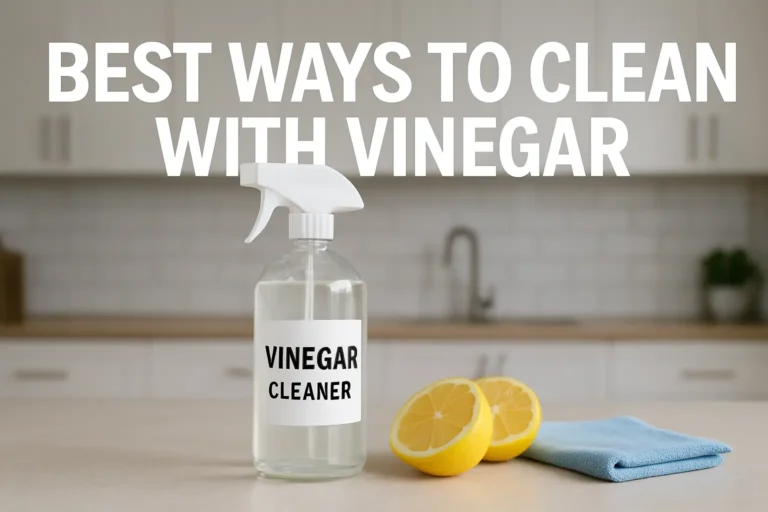
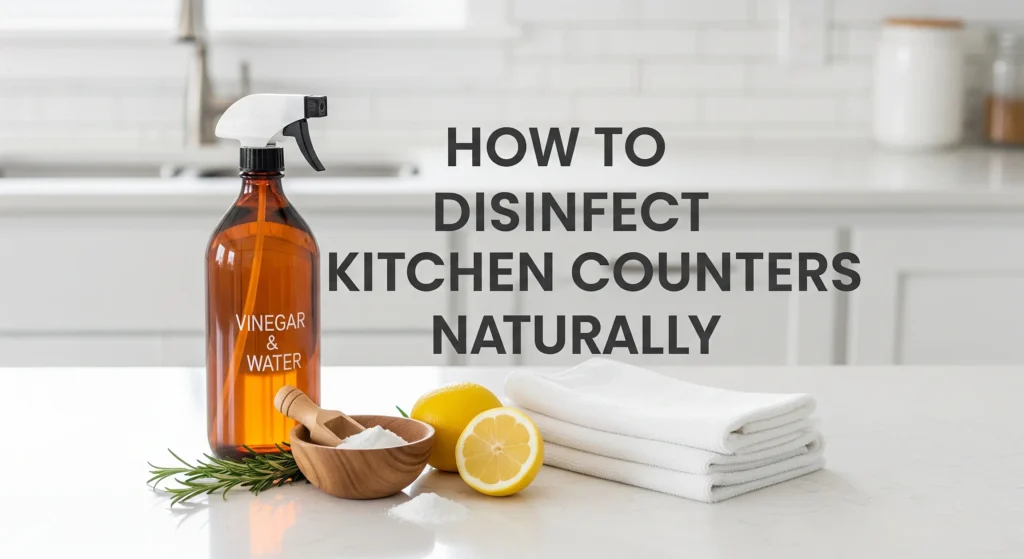
1. White Vinegar Spray
Vinegar is naturally acidic, making it effective at killing bacteria and neutralizing odors.
- Mix equal parts white vinegar and water in a spray bottle.
- Spray generously over the counter.
- Let it sit for 5–10 minutes.
- Wipe clean with a dry cloth.
Best for: Stainless steel, ceramic, and laminate surfaces.
Avoid on: Granite, marble, or natural stone.
2. Lemon and Salt Scrub
Lemon juice is acidic and antibacterial, while salt adds a mild scrubbing power.
- Cut a lemon in half.
- Sprinkle coarse salt on the cut side.
- Scrub directly onto the countertop.
- Rinse with warm water and wipe dry.
Best for: Stains, sticky spots, and fresh citrus fragrance.
3. Baking Soda Paste
Baking soda is mildly abrasive and great for sticky or greasy areas.
- Mix 3 tablespoons baking soda with a few drops of water to form a paste.
- Spread on stained spots.
- Let it sit for 5 minutes.
- Scrub gently, rinse, and dry.
Best for: Spot cleaning and removing grease.
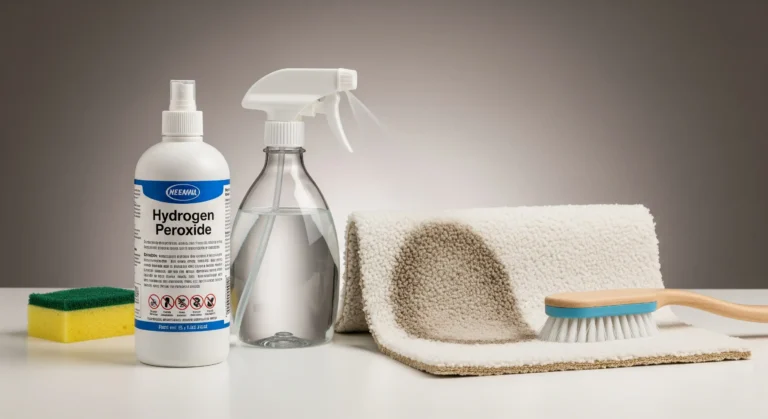
4. Hydrogen Peroxide Spray
Hydrogen peroxide (3%) is a natural germ-killer.
- Pour into a spray bottle (no dilution needed).
- Spray across the counter.
- Leave for 5 minutes.
- Wipe dry with a cloth.
Best for: Killing foodborne bacteria like E. coli and Salmonella.
5. Essential Oil Cleaner (Optional)
Essential oils like tea tree, lavender, and eucalyptus have antibacterial properties.
- Mix:
- 1 cup water
- 1 cup vinegar
- 10 drops tea tree or lavender oil
- Spray and wipe clean.
Best for: Natural fragrance and mild antibacterial boost.
Step 4: Dry and Maintain Your Counters
Moisture is a breeding ground for bacteria. Always:
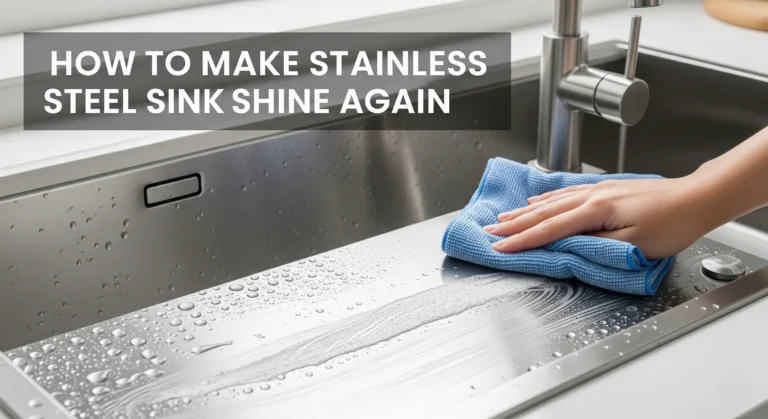
- Wipe dry with a clean towel.
- Use separate cloths for dishes and counters.
- Immediately clean spills to prevent staining and contamination.
Material-Specific Countertop Care
Not all counters react the same to natural cleaners. Here’s what you should know:
Granite & Marble Counters
- Avoid vinegar and lemon (acid damages stone).
- Use mild dish soap + water or hydrogen peroxide.
- Dry thoroughly to prevent water spots.
Quartz Counters
- Use mild dish soap + water or vinegar solution.
- Avoid abrasive scrubbing with salt or baking soda.
Laminate Counters
- Vinegar and baking soda are safe.
- Avoid harsh scrubbing tools that may scratch.
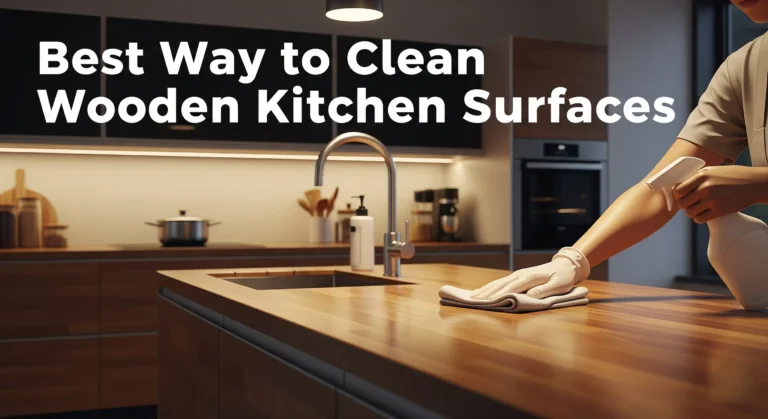
Wooden Counters
- Use diluted vinegar or hydrogen peroxide.
- Never soak with water; wipe dry immediately.
- Occasionally oil with food-grade mineral oil.
Real-Life Hacks for Easier Counter Disinfection
- Keep a spray bottle handy: Pre-mix vinegar solution for quick daily cleaning.
- Use cutting boards wisely: Prevent raw meat juices from touching counters.
- Color-code cloths: Assign one color for counters, another for dishes.
- Night routine: End your day with a quick vinegar spray wipe to keep counters fresh.
- Weekly deep clean: Once a week, do a 2-step process (soap wash + hydrogen peroxide).
FAQs About Natural Counter Disinfection
Q1: Is vinegar safe for all kitchen counter materials?
No. Vinegar is safe for laminate, stainless steel, and tile but should not be used on granite or marble.
Q2: How often should I disinfect my kitchen counters?
Daily is recommended, especially after cooking or handling raw meat.
Q3: Do natural disinfectants kill all bacteria?
They are highly effective against most everyday household germs. However, for heavy-duty sanitization, hydrogen peroxide works best.
Q4: Can vinegar and hydrogen peroxide be mixed?
No. Mixing creates peracetic acid, which can be harmful. Use them separately.
Q5: What’s the fastest natural disinfectant?
Hydrogen peroxide spray—it kills germs within 5 minutes.
Conclusion
By now, you know how to disinfect kitchen counters naturally using vinegar, lemon, baking soda, hydrogen peroxide, and essential oils. These natural solutions keep your kitchen safe, eco-friendly, and chemical-free.