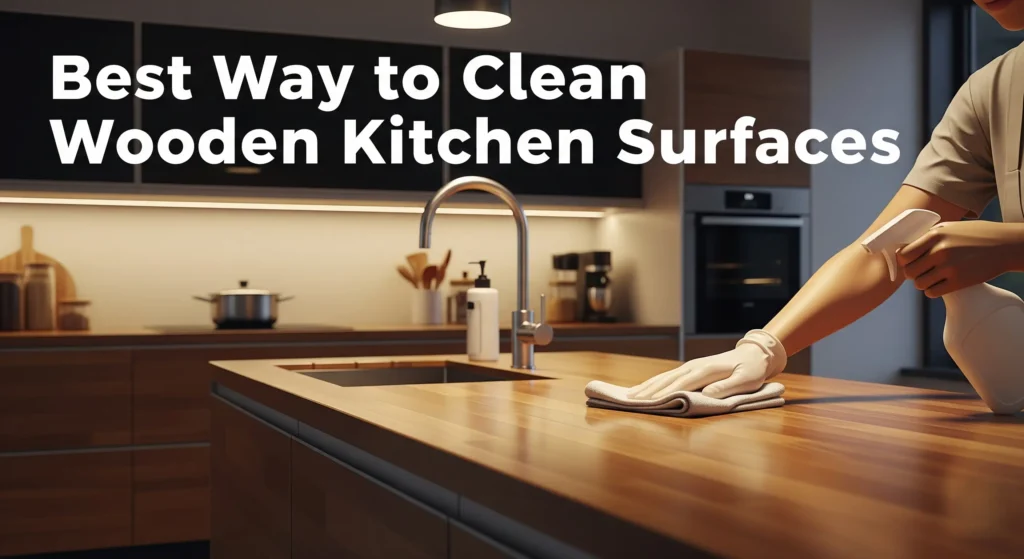
Best Way to Clean Wooden Kitchen Surfaces
Ever struggled with sticky stains or dull patches on your wooden kitchen counters and cutting boards? You’re not alone. Wooden surfaces look beautiful but can easily absorb grease, water, and food residue if not cleaned properly.
The best way to clean wooden kitchen surfaces is to use mild dish soap, warm water, and a soft cloth for daily cleaning, followed by occasional deep cleaning with natural solutions like vinegar, lemon, or baking soda. This keeps the wood fresh, hygienic, and damage-free.
In this guide, I’ll walk you through step-by-step cleaning methods, natural hacks, and expert tips to keep your wooden kitchen surfaces spotless and long-lasting.
Why Wooden Kitchen Surfaces Need Special Care
Unlike stainless steel or tiles, wood is porous. This means it can absorb liquids, odors, and bacteria if not cleaned the right way. Proper care not only keeps it clean but also prevents cracks, warping, and stains.
Step-by-Step: Best Way to Clean Wooden Kitchen Surfaces
1. Daily Cleaning Routine
- Step 1: Wipe the surface with a damp microfiber cloth to remove crumbs and dust.
- Step 2: Mix a few drops of mild dish soap with warm water.
- Step 3: Dip a cloth into the soapy water, wring it out, and wipe the wooden surface gently.
- Step 4: Rinse the cloth with clean water and wipe again to remove soap residue.
- Step 5: Dry immediately with a soft towel to avoid moisture soaking into the wood.
👉 Why this works: Soap removes grease, while quick drying prevents swelling or cracks.
2. Deep Cleaning Once a Week
- Mix equal parts white vinegar and water in a spray bottle.
- Lightly spray the solution on the wooden surface.
- Wipe with a damp cloth and dry completely.
- For cutting boards or counters with food odors, rub half a lemon directly on the surface.
👉 Why this works: Vinegar is a natural disinfectant, and lemon helps neutralize odors.
3. Removing Stubborn Grease Stains
- Sprinkle baking soda on the greasy area.
- Add a few drops of water to make a paste.
- Gently scrub with a soft sponge in circular motions.
- Wipe clean with a damp cloth and dry thoroughly.
👉 Pro Tip: Avoid harsh scrubbing pads—they can scratch the wood.
4. Disinfecting Safely
Never use bleach on wood. Instead, try this natural option:
- Mix 1 cup of water with 1 tablespoon of vinegar and 1 teaspoon of salt.
- Apply with a cloth and let it sit for 5 minutes.
- Wipe dry immediately.
👉 Why this works: It kills bacteria without damaging the wood fibers.
5. Maintaining Wooden Surfaces with Oil
Wood needs conditioning to prevent drying out:
- Once a month, apply food-grade mineral oil or coconut oil.
- Use a clean cloth to rub the oil in circular motions.
- Let it soak overnight, then wipe off excess.
👉 Why this matters: Oiling nourishes the wood, restores shine, and protects against moisture.
Practical Tips & Real-Life Hacks
- Always cut on cutting boards, not directly on wooden counters, to prevent scratches.
- Avoid leaving wet items (like damp towels or dishes) on wood.
- Use coasters and mats under hot pans and cups.
- For odor removal, sprinkle salt, rub with a lemon, and wipe clean.
- Clean spills immediately—especially wine, coffee, and oil.
FAQs About Cleaning Wooden Kitchen Surfaces
1. Can I use vinegar daily on wooden surfaces?
No, daily use of vinegar can dry out wood. Use it only for weekly or occasional deep cleaning.
2. What is the safest oil to condition wood?
Food-grade mineral oil is best. Avoid vegetable oils like olive oil—they can go rancid.
3. How do I remove water rings from wooden counters?
Apply a paste of baking soda and water, rub gently, then dry and re-oil the area.
4. Is lemon safe for wooden surfaces?
Yes, but don’t overuse it. Lemon is acidic, so use sparingly to avoid long-term damage.
5. How often should I oil wooden kitchen surfaces?
At least once a month, or more often if the wood looks dry.
Final Thoughts
Wooden kitchen surfaces bring warmth and beauty to your home, but they need the right care. The best way to clean wooden kitchen surfaces is with mild soap and water daily, vinegar for deep cleaning, and regular oiling for maintenance.