How to Clean Cutting Boards (Wood & Plastic)
Ever noticed stubborn stains or lingering smells on your cutting board and wondered if it’s truly clean?
The best way to clean cutting boards—whether wood or plastic—is to wash them immediately with hot water and mild soap, sanitize with safe kitchen solutions, and dry them completely to prevent bacteria growth.
Cutting boards are kitchen essentials, but they also collect germs, odors, and stains from meat, vegetables, and everyday cooking. A regular wipe isn’t enough—you need the right cleaning method depending on whether your board is wooden or plastic.
This guide will show you step-by-step how to clean, sanitize, and maintain both wood and plastic cutting boards so they last longer and stay safe for food prep.
Why Cleaning Cutting Boards Properly Matters
- Food Safety: Cutting boards can trap bacteria like E. coli and Salmonella if not sanitized properly.
- Durability: Proper cleaning extends the life of your board.
- Taste & Smell: Nobody wants garlic-flavored fruit salad. Regular cleaning prevents odor transfer.
How to Clean Cutting Boards: Step-by-Step
1. Daily Cleaning (Wood & Plastic)
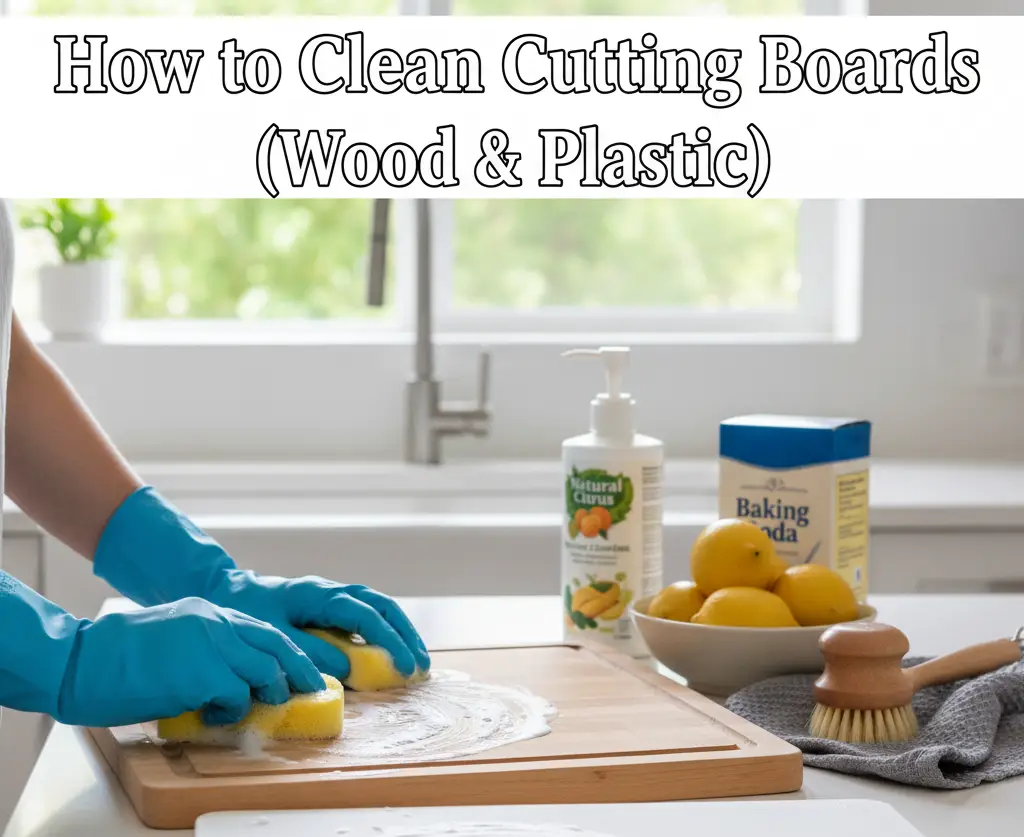
- Rinse the board with hot water immediately after use.
- Apply a few drops of mild dish soap.
- Scrub using a soft sponge or dish brush.
- Rinse thoroughly with warm water.
- Dry upright or with a clean towel—never leave it damp.
💡 Tip: Avoid soaking wooden boards in water, as it can warp or crack them.
2. Deep Cleaning Wooden Cutting Boards
Wood is porous and requires extra care.
What you need:
- Coarse salt or baking soda
- Lemon
- Vinegar (optional)
Steps:
- Sprinkle coarse salt or baking soda across the surface.
- Cut a lemon in half and scrub the board using the cut side.
- Let it sit for 5 minutes.
- Rinse with warm water and dry immediately.
- For odors, wipe with a vinegar-dampened cloth and rinse again.
💡 Pro Hack: Oil your wooden board monthly with food-grade mineral oil to prevent cracks and keep it smooth.
3. Deep Cleaning Plastic Cutting Boards
Plastic boards can develop stains from beets, turmeric, and tomato sauce.
What you need:
- Baking soda
- Hydrogen peroxide or vinegar
- Dish soap
Steps:
- Make a paste of baking soda, hydrogen peroxide, and dish soap.
- Spread over stained areas and let sit for 10 minutes.
- Scrub with a brush and rinse with hot water.
- Air dry completely.
💡 Pro Hack: Place plastic cutting boards in the dishwasher if they are dishwasher-safe. The high heat helps sanitize effectively.
4. Sanitizing Cutting Boards Safely
For boards used with raw meat, extra sanitizing is key.
Methods:
- Vinegar Solution: Wipe down with a 1:1 vinegar and water mix.
- Bleach Solution (Plastic Only): Mix 1 tablespoon bleach with 1 gallon of water. Soak for a few minutes, rinse thoroughly.
- Hydrogen Peroxide (Wood or Plastic): Pour a small amount over the surface, let bubble for 1–2 minutes, then rinse and dry.
5. Drying & Maintenance
- Always dry cutting boards upright or on a drying rack.
- For wooden boards, oil monthly to prevent splitting.
- Replace cutting boards if they have deep grooves or cracks that can harbor bacteria.
Real-Life Hacks for Cleaner Cutting Boards
- Rub a halved potato with baking soda across plastic boards to fade stains.
- Store wooden boards in a dry, ventilated spot—not under the sink.
- Use color-coded boards (green for vegetables, red for meat) to reduce cross-contamination.
FAQs About Cleaning Cutting Boards
Q1: Can I put a wooden cutting board in the dishwasher?
No. The high heat and water exposure can warp or crack wood. Hand wash only.
Q2: How often should I oil my wooden cutting board?
Once a month, or whenever the wood looks dry. Use food-grade mineral oil.
Q3: What’s the best way to remove garlic or onion smell?
Rub with lemon and salt, then rinse. Vinegar can also neutralize odors.
Q4: When should I replace a cutting board?
Replace when there are deep cracks or grooves that can’t be cleaned properly.
Q5: Is bleaching safe for wooden boards?
No. Bleach can damage wood fibers. Stick to vinegar, hydrogen peroxide, or lemon.
Final Thoughts
Knowing how to clean cutting boards (wood & plastic) properly keeps your kitchen safe, your meals fresh, and your boards long-lasting. Daily washing, monthly maintenance, and occasional deep cleaning are all it takes.