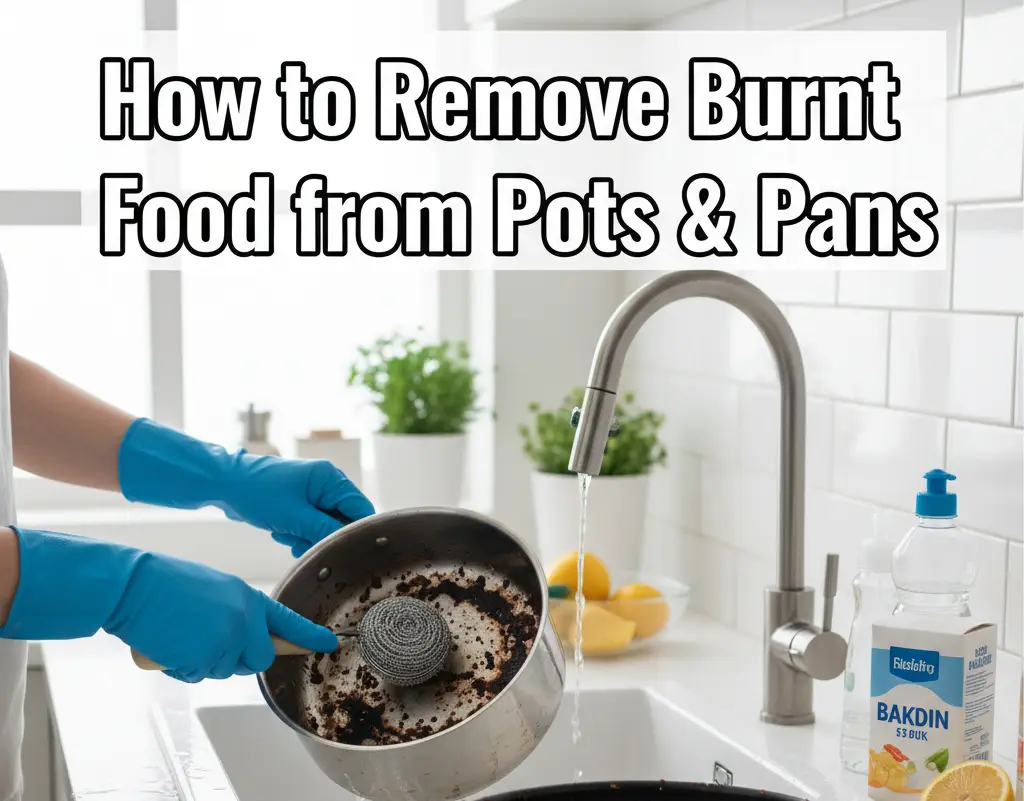
How to Remove Burnt Food from Pots & Pans
Have you ever left food cooking a bit too long and ended up with a stubborn burnt layer stuck to your pot or pan? The question many home cooks face is: What’s the easiest way to remove burnt food from pots and pans without ruining them?
The quick answer: Soak the cookware in hot water with baking soda, then scrub gently with a non-abrasive sponge. For tougher cases, vinegar, salt, or even dish soap boiling can help loosen burnt residue.
This guide will walk you through step-by-step methods, practical cleaning hacks, and safe techniques for different cookware types.
Why Burnt Food Sticks to Pots & Pans
Understanding the cause helps you prevent it next time. Burnt food happens when heat causes sugars, proteins, and fats to carbonize and bond with the pan’s surface. Nonstick pans, stainless steel, and cast iron all react differently, which is why each may need a slightly different cleaning method.
Step-by-Step Methods to Remove Burnt Food
1. The Baking Soda & Hot Water Method
Best for: Stainless steel, enamel, and nonstick pans.
Steps:
- Fill the pot or pan with hot water, enough to cover the burnt food.
- Add 2–3 tablespoons of baking soda.
- Let it sit for at least 30 minutes (overnight for stubborn burns).
- Gently scrub with a non-abrasive sponge.
- Rinse thoroughly and dry.
Why it works: Baking soda softens carbonized food and reduces scrubbing effort.
2. Vinegar & Baking Soda Boil
Best for: Stainless steel, aluminum, enamel.
Steps:
- Add equal parts water and white vinegar to the pan (enough to cover burnt areas).
- Bring the mixture to a boil for 5 minutes.
- Turn off the heat and carefully add 2 tablespoons of baking soda. (It will fizz.)
- Once cooled, scrub gently with a sponge or brush.
Why it works: Vinegar breaks down mineral deposits and baking soda helps lift burnt residue.
3. Salt & Lemon Scrub
Best for: Cast iron and stainless steel.
Steps:
- Sprinkle coarse salt over the burnt area.
- Cut a lemon in half and use it as a scrubber.
- Rinse with warm water.
- Dry thoroughly (especially for cast iron).
Why it works: Salt acts as a gentle abrasive, while lemon provides acidity for cleaning.
4. Dish Soap & Boiling Water
Best for: Nonstick pans, stainless steel.
Steps:
- Fill the pot with water and add a few drops of dish soap.
- Bring to a gentle boil.
- Let cool slightly, then scrub with a sponge.
- Rinse and repeat if necessary.
Why it works: Heat loosens food particles, and soap dissolves grease.
5. Aluminum Foil Scrub (Last Resort)
Best for: Stainless steel and uncoated cookware only (avoid on nonstick).
Steps:
- Crumple aluminum foil into a ball.
- Use it to scrub burnt spots after soaking with hot water.
- Rinse thoroughly.
Why it works: Foil provides extra scrubbing power without being as harsh as steel wool.
Special Care for Different Cookware
Stainless Steel
- Use vinegar and baking soda for best results.
- Avoid steel wool (it can scratch).
Nonstick Pans
- Stick to dish soap and soft sponges.
- Never use abrasive cleaners or foil.
Cast Iron
- Use coarse salt and minimal water.
- Dry immediately and re-season if necessary.
Enamel-Coated Pans
- Baking soda and vinegar are safe.
- Avoid sudden temperature changes to prevent cracking.
Practical Tips to Prevent Burnt Food Build-Up
- Cook at medium heat instead of high.
- Use enough oil or butter for a protective layer.
- Stir frequently to avoid food sticking.
- Soak cookware immediately after cooking.
- Season cast iron regularly to maintain its surface.
FAQs About Removing Burnt Food from Pots & Pans
Q1: Can I use bleach to clean burnt food?
No, bleach can damage cookware surfaces and is unsafe for food-contact items.
Q2: How do I remove burnt food without scrubbing too much?
Soaking with baking soda and hot water overnight usually does the trick with minimal scrubbing.
Q3: Is it safe to use steel wool on pots and pans?
Only on stainless steel, and even then, sparingly. Avoid it on nonstick, enamel, or cast iron.
Q4: What’s the fastest method for light burnt spots?
Boiling water with dish soap is quick and effective for light burns.
Q5: Can burnt food permanently damage a pan?
In most cases, no. With the right cleaning method, burnt food can be removed. However, severe burns on nonstick coatings may shorten their lifespan.
Final Thoughts
Knowing how to remove burnt food from pots and pans saves both time and cookware. With baking soda, vinegar, salt, or soap, you can restore your pans without much hassle.