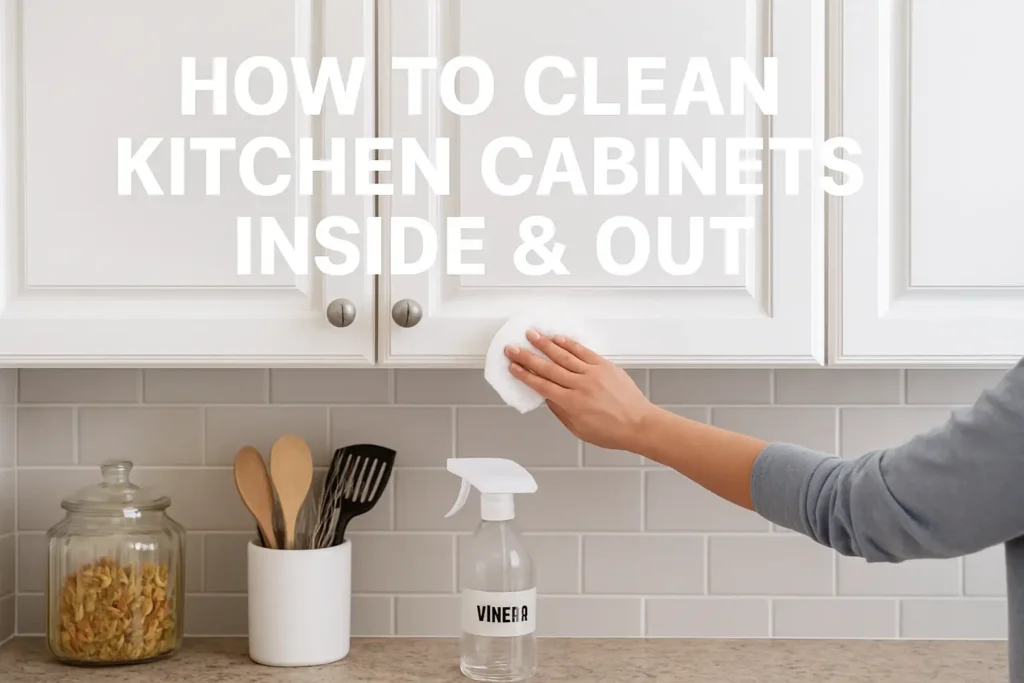
How to Clean Kitchen Cabinets Inside & Out
Do your kitchen cabinets look greasy on the outside or cluttered inside?
The best way to clean kitchen cabinets inside and out is to start by emptying them, dusting and wiping the interior with mild soap, tackling grease on the exterior with vinegar or baking soda, and finishing by drying and organizing before returning items.
This guide provides a detailed, step-by-step process, along with practical cleaning hacks and expert advice to keep your cabinets spotless, fresh, and organized.
Why Kitchen Cabinets Get So Dirty
Cabinets are exposed to grease, steam, and food spills daily. Over time, dust sticks to the oil, creating a sticky film, especially near the stove. Inside, crumbs from dry goods, leaking spice jars, and expired food add to the mess. Without proper care, this buildup not only makes cabinets look old but can also attract pests like ants or cockroaches.
Cleaning regularly prevents stains from becoming permanent, keeps odors away, and extends the life of the cabinets.
Supplies You’ll Need
Before starting, gather the right tools. Using the wrong products can damage cabinet surfaces.
Basic Supplies:
- Soft microfiber cloths
- Non-abrasive sponges
- Mild dish soap
- White vinegar
- Baking soda
- Spray bottle
- Bucket of warm water
- Old toothbrush (for corners and hardware)
- Shelf liners (optional for organizing after cleaning)
Avoid:
- Harsh scrub pads (they scratch finishes)
- Undiluted bleach or ammonia (can strip paint or finish)
Step-by-Step: How to Clean Kitchen Cabinets Inside & Out
Step 1: Empty All Cabinets
Remove everything from your cabinets. This may feel tedious, but it’s essential.
- Sort food items: Check expiration dates and toss what’s old.
- Wipe jars and bottles: Sticky honey jars or oily vinegar bottles can leave residue behind if not cleaned.
- Group similar items: This makes re-organizing easier later.
Step 2: Dust and Vacuum the Interior
Before using liquid cleaners, remove all loose dirt.
- Use a microfiber cloth to dust shelves and corners.
- For heavy crumbs, a handheld vacuum works best.
- Pay close attention to corners, especially in lower cabinets where flour or rice grains often collect.
This step prevents smudging crumbs into sticky messes when wiping with liquid later.
Step 3: Wash Inside Surfaces
Create a gentle cleaner:
- Mix 1–2 teaspoons mild dish soap in a quart of warm water.
How to clean:
- Dip a soft cloth or sponge in the solution and wring it out so it’s damp, not soaking.
- Wipe shelves, walls, and corners thoroughly.
- For sticky spills (like syrup), press the damp cloth on the spot for a few minutes to loosen before wiping.
- Rinse with a clean damp cloth to remove soap residue.
Tip: If your cabinets are wood, avoid too much water. Use a barely damp cloth and always dry afterward.
Step 4: Clean the Outside Surfaces
The outside of cabinets often shows fingerprints, cooking splatters, and grease buildup.
Everyday cleaning:
- Mix equal parts vinegar and warm water in a spray bottle.
- Lightly spray the surface, then wipe with a microfiber cloth.
- Work in sections to avoid streaks.
For greasy cabinets near the stove:
- Add a teaspoon of baking soda to the vinegar-water mix for extra cleaning power.
- Wipe in circular motions until the grease lifts.
Painted or laminate cabinets: Use the same mild soap and water mixture from Step 3 instead of vinegar, which may dull the finish.
Step 5: Focus on Cabinet Handles and Knobs
Handles are one of the dirtiest spots in the kitchen since they’re touched multiple times a day.
For removable handles/knobs:
- Unscrew them and soak in warm, soapy water for 10–15 minutes.
- Use an old toothbrush to scrub crevices.
- Rinse, dry, and reattach.
For fixed hardware:
- Dip a cloth or toothbrush in soapy water, scrub gently, and wipe clean.
This small step makes a big difference in the overall cleanliness of your cabinets.
Step 6: Clean Hinges and Edges
Cabinet hinges, edges, and trim often collect hidden grime.
- Use a toothbrush dipped in soapy water for detailed scrubbing.
- Wipe hinges with a slightly damp cloth but avoid soaking them to prevent rust.
- Dry thoroughly with a towel.
Step 7: Remove Stubborn Grease
If vinegar and soap aren’t enough, use a baking soda paste:
- Mix 3 tablespoons baking soda with 1 tablespoon water.
- Apply to greasy spots with a cloth.
- Gently rub in circles until the stain lifts.
- Wipe with a clean, damp cloth and dry.
Tip: For very greasy wood cabinets, a few drops of mineral oil on a cloth can dissolve sticky residue without damaging the finish.
Step 8: Dry Thoroughly
Moisture is the enemy of cabinets, especially wood.
- Use a dry towel to wipe every surface.
- Pay extra attention to hinges, seams, and edges.
- Leave cabinet doors open for 15 minutes to ensure complete drying.
Step 9: Organize Before Returning Items
Before restocking cabinets, consider these hacks:
- Use shelf liners: They protect surfaces and make cleanup easier.
- Group similar items: Store spices together, canned goods together, etc.
- Use baskets or bins: Helps prevent spills from spreading.
- Place heavier items lower: Reduces strain on upper cabinet shelves.
This organization keeps cabinets cleaner longer and saves time during cooking.
Pro Cleaning Hacks for Cabinets
- Weekly wipe-down: Spend two minutes wiping cabinet doors with a damp cloth to prevent buildup.
- Odor control: Place a small bowl of baking soda or a few coffee beans inside to absorb smells.
- Glass cabinet doors: Use glass cleaner or vinegar for streak-free shine.
- Avoid direct heat: Don’t use a hairdryer or heat gun to dry cabinets, as it may damage finishes.
- Seasonal check: Do a full cabinet clean and reorganization every 3–4 months.
FAQs on Cleaning Kitchen Cabinets
1. What is the best cleaner for kitchen cabinets?
Mild dish soap and warm water is the safest option. For grease, try diluted vinegar or baking soda paste.
2. How often should I clean my kitchen cabinets?
Wipe exteriors weekly and deep clean interiors every 3–4 months.
3. Can I use vinegar on wooden cabinets?
Yes, but always dilute it with water (50/50) and dry immediately to avoid damage.
4. How do I remove sticky residue inside cabinets?
Use a baking soda paste, let it sit for a few minutes, then scrub gently with a damp cloth.
5. Should I line my kitchen cabinets?
Yes, liners protect shelves from spills and make future cleaning faster.
Final Thoughts
Knowing how to clean kitchen cabinets inside and out helps you maintain both hygiene and appearance in your kitchen. With a regular cleaning schedule, natural cleaners like vinegar and baking soda, and smart organization, your cabinets will stay fresh and functional for years.