Best Way to Organize & Clean Pantry
Is your pantry cluttered with expired cans, half-used boxes, and items you can never find when you need them? You’re not alone. Many households struggle to keep their pantry neat and functional. The best way to organize and clean your pantry is to start by removing everything, checking expiration dates, cleaning shelves, and then arranging items in clear zones with proper storage containers. This method ensures your pantry stays both tidy and practical.
In this guide, we’ll go step by step through organizing and cleaning your pantry so it looks great and works efficiently every day.
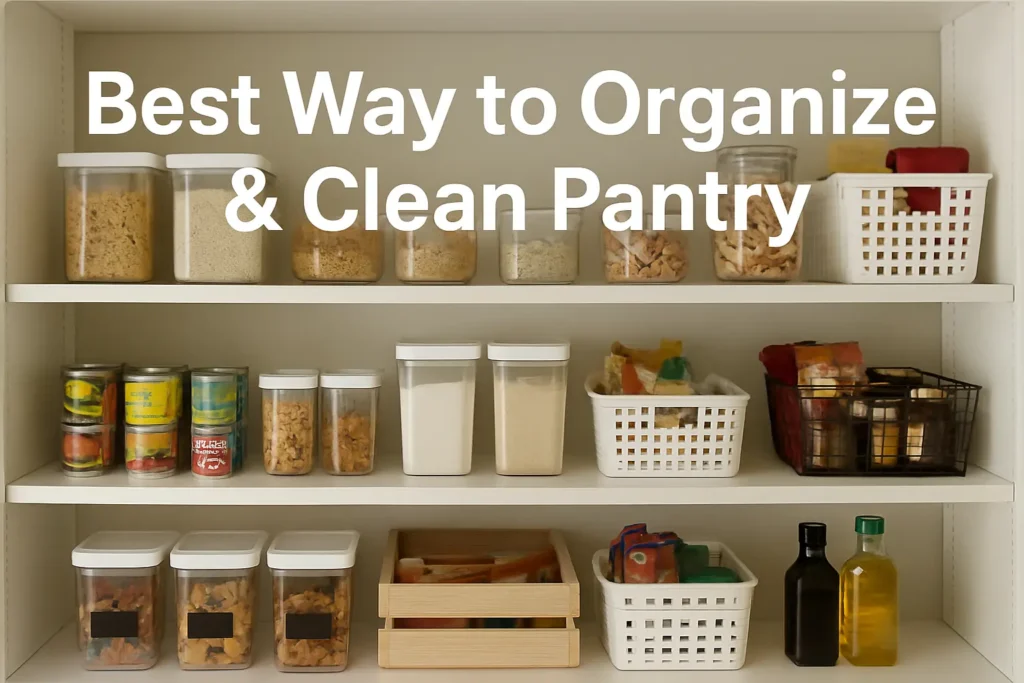
Step 1: Empty the Pantry Completely
The first step is to take everything out of the pantry. This may feel overwhelming, but it allows you to start with a blank slate.
- Place items on your counter or dining table.
- Group similar foods together as you remove them (e.g., canned goods, baking items, snacks).
- This makes the sorting process easier later.
Step 2: Check Expiration Dates and Sort Items
Once everything is out, it’s time to assess what you actually need.
- Discard expired food: Toss items that are past their expiration date or look stale.
- Donate unopened items: If you won’t use a food item but it’s still within date, consider donating it to a local food bank.
- Keep only what you use: Avoid clutter by letting go of foods that sit untouched for months.
Step 3: Deep Clean Pantry Shelves and Walls
Now that your pantry is empty, give it a thorough cleaning.
- Vacuum crumbs from shelves and corners.
- Wipe down surfaces with warm soapy water or a gentle all-purpose cleaner.
- Dry completely to prevent mold or mildew.
- If you have wire shelving, consider using shelf liners to make surfaces flat and easier to wipe in the future.
Step 4: Plan Pantry Zones for Efficiency
A well-organized pantry works best when items are grouped into zones. Think of it like a grocery store layout:
- Grains and Pasta: Rice, oats, pasta.
- Canned Goods: Vegetables, beans, soups.
- Snacks: Chips, crackers, cookies.
- Breakfast Foods: Cereals, pancake mix.
- Baking Supplies: Flour, sugar, baking powder.
- Condiments and Sauces: Oils, vinegars, ketchup, soy sauce.
By creating zones, you’ll know exactly where to find what you need.
Step 5: Use Storage Containers and Labels
Investing in storage solutions makes a huge difference.
- Clear containers: Store rice, flour, cereal, and pasta in airtight containers. Not only do they look neat, but they also keep food fresh longer.
- Baskets or bins: Use bins for snacks, juice boxes, or individually packed items.
- Lazy Susans: Perfect for oils, sauces, and condiments.
- Labels: Label containers so everyone in the household knows where items belong.
Step 6: Arrange Items by Frequency of Use
Accessibility is key.
- Place frequently used items at eye level.
- Keep heavier items, like large bags of rice or flour, on lower shelves.
- Store less-used or seasonal items (like holiday baking supplies) on higher shelves.
This arrangement saves time and keeps your pantry functional.
Step 7: Maintain Pantry Organization Weekly
Cleaning your pantry isn’t a one-time task—it requires upkeep.
- Weekly quick checks: Remove empty packages and wipe small spills.
- Monthly deep checks: Look for expired foods and reorganize misplaced items.
- Restock system: Make a running grocery list as soon as you notice low stock.
This consistency ensures your pantry never falls back into chaos.
Practical Pantry Hacks
- Store snacks at kid level so children can easily grab what they need without disrupting other shelves.
- Use tiered shelf organizers for canned goods so you can see labels at a glance.
- Add chalkboard or whiteboard panels on the pantry door for grocery lists or meal planning.
- Keep airtight jars for baking essentials to prevent pests like flour beetles.
FAQs About Organizing & Cleaning a Pantry
1. How often should I clean my pantry?
A full clean every 3–4 months is recommended, with quick weekly checks for spills, expired food, or clutter.
2. What containers work best for pantry organization?
Clear airtight containers are best for dry goods like flour, cereal, pasta, and rice. Baskets or bins are great for snacks, while lazy Susans are useful for oils and sauces.
3. How can I make a small pantry more efficient?
Maximize vertical space with stackable bins, use over-the-door organizers, and install tiered shelves for canned goods.
4. Should I store all food items in the pantry?
No, some foods like potatoes, onions, and bread are better stored in a cool, dry place outside the pantry to prevent spoilage.
5. How do I keep pests out of my pantry?
Keep food sealed in airtight containers, clean spills immediately, and check for signs of pests regularly.
Final Thoughts
The best way to organize and clean your pantry is to empty it, sort through items, deep clean shelves, and then rebuild a functional system with zones, containers, and labels. By following these steps and maintaining them weekly, you’ll have a pantry that’s both tidy and practical.