How to Remove Algae from a Swimming Pool (Step-by-Step Guide for a Clear, Healthy Pool)
How do you get rid of stubborn algae taking over your pool?
If your swimming pool water looks cloudy, green, or slimy, you’re dealing with algae — a common but frustrating problem for pool owners.
Here’s the short answer: You can remove algae from your swimming pool by brushing the walls, balancing the water chemistry, shocking the pool, and filtering continuously until the water clears.
Now, let’s go step-by-step through how to clean algae effectively and prevent it from coming back.
What Causes Algae in a Swimming Pool?
Before you start cleaning, it’s important to understand why algae grow in the first place. Algae are microscopic plants that thrive in warm, stagnant, and poorly maintained water.
Common causes include:
- Low chlorine levels
- Poor water circulation
- Unbalanced pH or alkalinity
- Warm weather and sunlight exposure
- Dirty pool filters or surfaces
Once algae start growing, they multiply quickly, turning clear water cloudy or green in just a few days.
Types of Pool Algae (Know What You’re Dealing With)
Not all algae are the same. Knowing the type helps you treat it correctly.
1. Green Algae (Most Common)
- Appearance: Light green, floating or clinging to pool walls.
- Cause: Low chlorine and poor filtration.
- Solution: Usually cleared with brushing and shock treatment.
2. Yellow or Mustard Algae
- Appearance: Yellow-brown dust that sticks to walls or pool floors.
- Cause: Resistant to chlorine and grows in shady areas.
- Solution: Requires higher chlorine levels and thorough cleaning.
3. Black Algae
- Appearance: Black or dark green spots on pool plaster.
- Cause: Penetrates pool surfaces and resists normal cleaning.
- Solution: Scrub vigorously with a steel brush and apply algaecide.
4. Pink Algae (Actually Bacteria)
- Appearance: Slimy pink film on corners or behind ladders.
- Cause: Poor circulation and infrequent cleaning.
- Solution: Shock and scrub all surfaces thoroughly.
Step-by-Step: How to Remove Algae from a Swimming Pool
Here’s a clear, actionable process to get your pool back to crystal-clear condition.
Step 1: Check and Balance the Pool Water
Before treating algae, you must balance your pool chemistry. Use a reliable test kit to measure chlorine, pH, and alkalinity.
Ideal Ranges:
- pH: 7.2 to 7.6
- Free Chlorine: 1–3 ppm
- Total Alkalinity: 80–120 ppm
If the pH is too high, chlorine becomes less effective. Add pH reducer (muriatic acid or sodium bisulfate) if necessary before shocking.
Step 2: Brush Pool Walls and Floor
Algae cling tightly to surfaces, so brushing is crucial before applying chemicals.
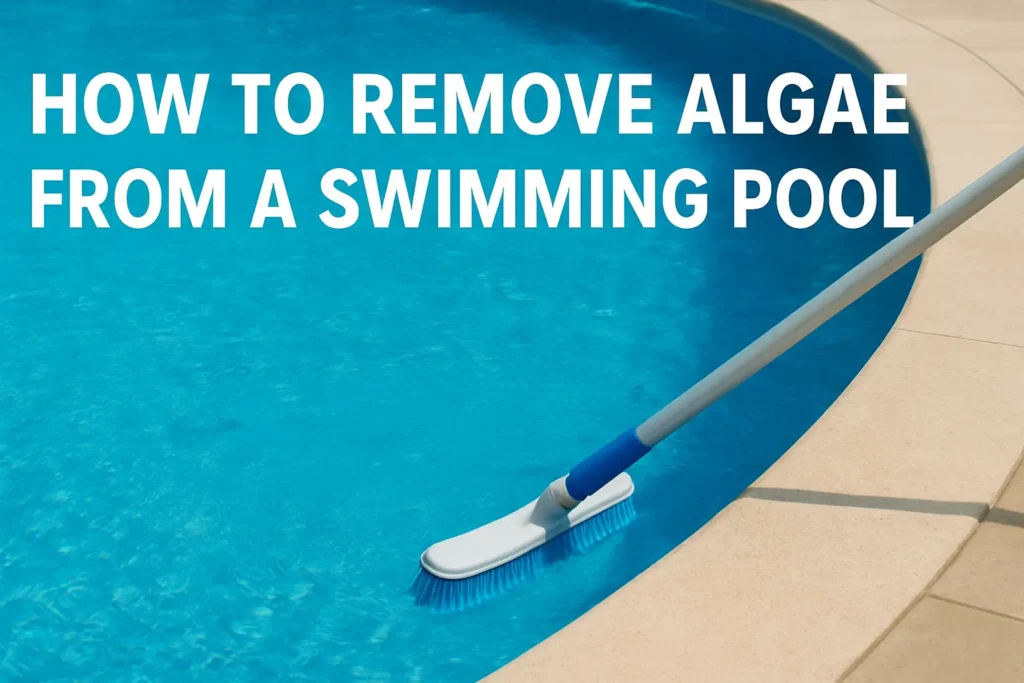
Use a stiff pool brush to scrub walls, steps, ladders, and any corners where algae may hide.
Tip:
If you have a vinyl liner, use a softer brush to prevent damage. For concrete pools, a stainless-steel brush works best.
Step 3: Vacuum the Pool
After brushing, vacuum the pool manually to remove loosened algae and debris.
If your pool filter has a waste setting, use it to send dirty water out of the system instead of through the filter.
Pro Tip: Don’t rely on an automatic pool cleaner — it may stir up algae instead of removing it.
Step 4: Shock the Pool
This is the most important step. Shocking means adding a large dose of chlorine to kill algae spores.
Use calcium hypochlorite pool shock, and apply 2–3 times the normal dose if the water is heavily affected.
Steps:
- Mix shock powder in a bucket of water (never add water to chlorine directly).
- Pour evenly around the pool edges.
- Run the pump for 24 hours straight to circulate.
Shocking Frequency:
- Light algae: 1 dose
- Moderate algae: 2 doses
- Severe algae: 3 doses over consecutive days
Step 5: Run the Filter Continuously
Keep your pool filter running 24–48 hours after shocking. This removes dead algae particles and helps chlorine distribute evenly.
If the filter pressure rises 8–10 psi above normal, backwash (for sand filters) or clean cartridges (for cartridge filters).
Step 6: Brush and Vacuum Again
Once the water starts to clear, brush and vacuum again to remove any remaining residue.
You may see fine dead algae on the pool floor — vacuum slowly to avoid stirring it up.
Step 7: Add Algaecide (Optional but Recommended)
After the chlorine levels return to normal, add a pool algaecide to prevent regrowth.
Choose an algaecide that matches your algae type:
- Green algae: Standard algaecide
- Yellow algae: Mustard-specific algaecide
- Black algae: Copper-based algaecide
Add according to the manufacturer’s directions, typically once a week during warm months.
Real-Life Hacks to Prevent Algae Growth
Preventing algae is easier than removing it. Here are some practical tips:
1. Maintain Proper Chlorine Levels
Test chlorine at least 2–3 times per week, especially after heavy rainfall or pool parties.
2. Shock Weekly During Hot Weather
Warm weather and sunlight accelerate algae growth. Shocking once a week keeps your pool safe.
3. Improve Circulation
Ensure all jets, skimmers, and drains are clear. Dead spots with stagnant water allow algae to form.
4. Clean Pool Accessories
Brushes, nets, floats, and ladders can harbor algae spores. Rinse them with a chlorine solution regularly.
5. Keep Filters Clean
Backwash sand filters weekly and clean cartridge filters as per instructions.
6. Cover the Pool When Not in Use
Using a pool cover reduces sunlight exposure and prevents debris buildup — both of which contribute to algae growth.
When to Call a Professional
If your pool water remains green even after shocking and filtering, or if black algae persist on the walls, it may be time to contact a pool maintenance professional.
They can use stronger treatments, including acid washing or specialized algaecides that aren’t available for consumer use.
Conclusion: Clear Water Starts with Consistent Care
Removing algae from a swimming pool requires a bit of patience and consistency — but it’s absolutely doable with the right approach.
By testing water regularly, brushing surfaces, and maintaining proper chlorine levels, you can enjoy a clear, healthy pool all year long.
For your next step, check out our guide on “How to Maintain Pool pH Balance Naturally” — it’s a perfect follow-up to prevent algae from returning.
Frequently Asked Questions (FAQs)
1. How long does it take to get rid of algae in a pool?
It usually takes 2–4 days depending on the severity of the algae. Continuous filtration and repeated brushing help speed up the process.
2. Can you swim in a pool with algae?
No. Swimming in algae-contaminated water can cause skin irritation, eye infections, and other health risks.
3. What’s the best pool shock for algae?
Calcium hypochlorite shock is most effective for killing algae and restoring clear water.
4. Why does my pool turn green even after shocking?
This may happen if your pH or alkalinity is unbalanced, or if metals in the water react with chlorine. Retest the water chemistry and adjust levels.
5. How often should I use algaecide?
Use algaecide once a week during swimming season, especially in warm climates.