How to Get Rid of Green Algae in the Pool: A Complete Step-by-Step Guide
Have you ever walked out to enjoy a swim only to find your pool covered in green slime?
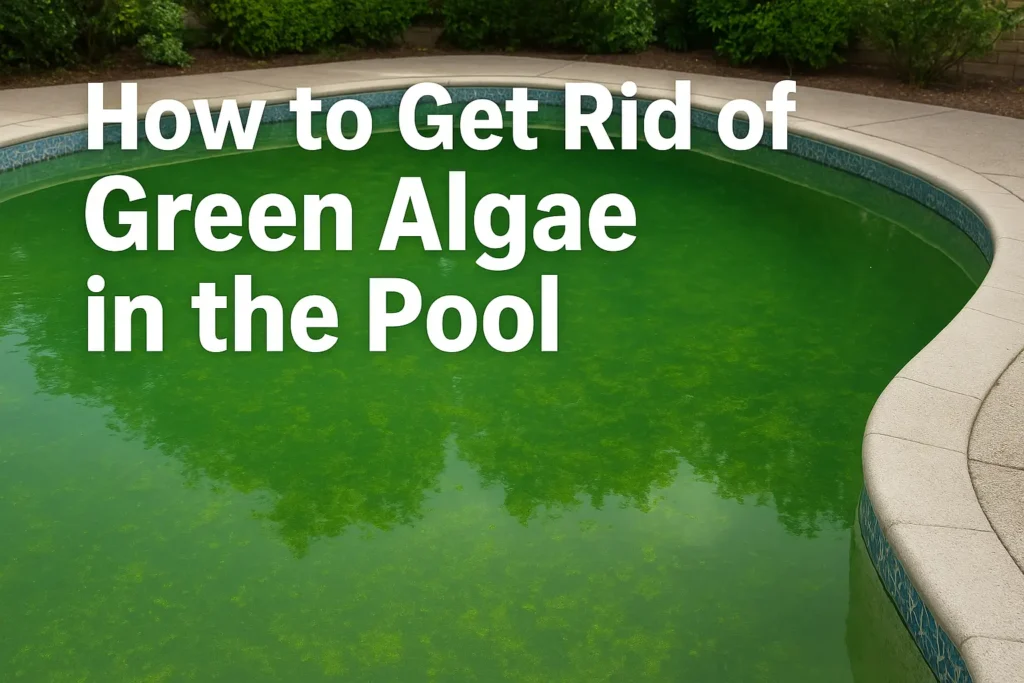
Green algae is one of the most common pool problems that turns clear water cloudy, slimy, and unsafe.
To get rid of green algae in your pool, you need to brush the pool walls, shock the water with chlorine, balance the pH levels, run the pump continuously for 24–48 hours, and clean the filter thoroughly.
Once cleaned, regular maintenance and proper chemical balance will keep algae from returning.
1. What Causes Green Algae in a Pool
Green algae thrive in warm, stagnant, and unbalanced pool water. Even the cleanest-looking pool can quickly turn green if its chemistry is off. The most common causes include:
- Low chlorine levels: Without enough sanitizer, algae spores multiply quickly.
- Poor circulation: Stagnant water in corners or behind ladders is an algae breeding ground.
- Unbalanced pH or alkalinity: Incorrect pH reduces chlorine effectiveness.
- Dirty filters or equipment: Filters clogged with debris make it hard to maintain proper water flow.
- Hot weather and sunlight: Warm temperatures speed up algae growth, especially in uncovered pools.
When these factors combine, algae can bloom within 24–48 hours — turning your pool from clear to cloudy green almost overnight.
2. How to Identify Green Algae Early
Recognizing algae early helps you stop the bloom before it spreads. Here’s how to spot it:
- Light green tint in the water — the first visible sign of algae starting to grow.
- Slimy film on pool walls, steps, or tiles.
- Cloudy or murky water that becomes worse each day.
- Chlorine levels dropping quickly even after adding sanitizer.
If you notice these signs, act immediately. The longer algae stay, the harder it is to remove.
3. Step-by-Step: How to Get Rid of Green Algae in the Pool
Getting rid of green algae isn’t complicated — it just takes the right steps in order.
Here’s exactly what to do:
Step 1: Brush the Pool Walls and Floor
Start by brushing every surface of your pool — walls, floor, steps, and corners.
Algae cling tightly to surfaces, and brushing breaks it loose so chlorine can kill it effectively.
Tools you’ll need:
- Pool brush (use stainless steel for concrete pools, nylon for vinyl or fiberglass)
- Telescopic pole for deep areas
Tip: Focus on shady or less-circulated areas — algae often start there.
Step 2: Test and Balance Pool Water
Next, use a reliable pool testing kit to check chlorine, pH, and alkalinity levels.
For effective algae removal, water chemistry must be balanced.
Target levels:
- pH: 7.2–7.6
- Alkalinity: 80–120 ppm
- Chlorine: 1–3 ppm (before shocking)
If pH is too high, chlorine won’t work properly. Add pH reducer (like muriatic acid) if needed before shocking the pool.
Step 3: Shock the Pool with Chlorine
This is the most critical step. “Shocking” means adding a high dose of chlorine to destroy all algae, bacteria, and contaminants.
How to shock your pool properly:
- Choose a chlorine-based pool shock (calcium hypochlorite is common).
- Follow the label instructions carefully — typically, you’ll use 1 pound per 10,000 gallons of water.
- Pour it evenly around the pool, especially in problem areas.
- Run the pump continuously for at least 24 hours after shocking.
Important: Always shock the pool in the evening or at night. Sunlight breaks down chlorine, reducing its effectiveness.
Step 4: Run the Filter Continuously
Keep the filter system running non-stop for at least 24–48 hours after shocking.
This helps circulate chlorine evenly and trap dead algae particles.
If the water is still cloudy after two days, clean or backwash the filter and continue running it until clear.
Step 5: Vacuum and Clean the Pool Filter
Once the water turns from green to cloudy white or blue, it means algae are dead.
Now it’s time to vacuum and clean the filter thoroughly.
Here’s what to do:
- Manually vacuum the pool to waste (not through the filter).
- Backwash sand or DE filters if pressure is 8–10 psi above normal.
- For cartridge filters, remove and rinse them with a hose.
Skipping this step can lead to algae returning because dead particles can settle back into the water.
Step 6: Apply an Algaecide (Optional but Helpful)
After shocking and cleaning, use a non-copper-based algaecide to prevent future blooms.
Add it as directed while the pump is running. It works as a preventive barrier, especially during hot months or heavy pool use.
4. Pro Tips to Prevent Algae Growth in the Future
Once your pool is clear again, follow these maintenance habits to keep algae away:
1. Keep Chlorine Levels Consistent
Check chlorine at least twice a week, especially in summer. Maintain levels between 1–3 ppm.
2. Brush Regularly
Even when the pool looks clean, brush it once a week to prevent spores from attaching to surfaces.
3. Clean the Filter System
Backwash sand filters every few weeks and rinse cartridge filters monthly.
4. Maintain Proper pH Balance
Keep pH within 7.2–7.6 so chlorine stays effective.
5. Use a Pool Cover
A simple cover helps keep sunlight and debris out, both of which feed algae growth.
6. Shock Weekly During Hot Months
Regular shocking prevents small algae colonies from growing out of control.
By sticking to these small habits, you can enjoy crystal-clear pool water all year long without the frustration of recurring algae problems.
5. FAQs
Q1. Why does green algae keep coming back in my pool?
Recurring algae usually means your chlorine levels are too low, or your filter isn’t running long enough. Check your chemical balance and run the pump daily for at least 8 hours.
Q2. Can I swim in a pool with green algae?
No. Green algae make the pool slippery and unsafe. It also harbors bacteria that can cause skin or eye irritation. Always clean and balance the pool before swimming again.
Q3. How long does it take to clear green algae from a pool?
It typically takes 2–4 days to clear green algae completely if you follow all steps — brushing, shocking, filtering, and cleaning.
Q4. Is algaecide enough to kill algae?
No. Algaecide works best as a preventive measure. Once algae have bloomed, you’ll need chlorine shock treatment to kill them effectively.
Q5. What’s the best chlorine shock for green algae?
A calcium hypochlorite shock is most effective because it raises chlorine levels quickly and works well against green algae blooms.
6. Final Thoughts
Green algae in the pool can seem frustrating, but the solution is simple once you understand the steps.
Brush thoroughly, test and balance your water, shock with chlorine, run the filter, and clean everything.
Once the pool is clear, stay consistent with maintenance — test water regularly, brush weekly, and keep chlorine stable.
With these habits, your pool will stay clean, clear, and ready for every swim.