Best Way to Remove Hard Water Stains from Shower Glass
Introduction: Why Do Hard Water Stains Keep Coming Back?
Have you ever scrubbed your shower glass endlessly, only to see cloudy white spots reappear within days? These stubborn stains are not dirt or soap residue — they’re caused by hard water deposits.
Quick Answer: The best way to remove hard water stains from shower glass is by using vinegar and baking soda together. Vinegar dissolves the minerals, while baking soda provides gentle scrubbing power without scratching the glass. For severe stains, a commercial calcium and lime remover may be necessary.
In this guide, you’ll learn why hard water stains form, the step-by-step process to clean them, natural DIY hacks, prevention strategies, and answers to the most common questions homeowners ask.
By the end, you’ll know exactly how to keep your shower glass clear and spotless.
What Exactly Are Hard Water Stains?
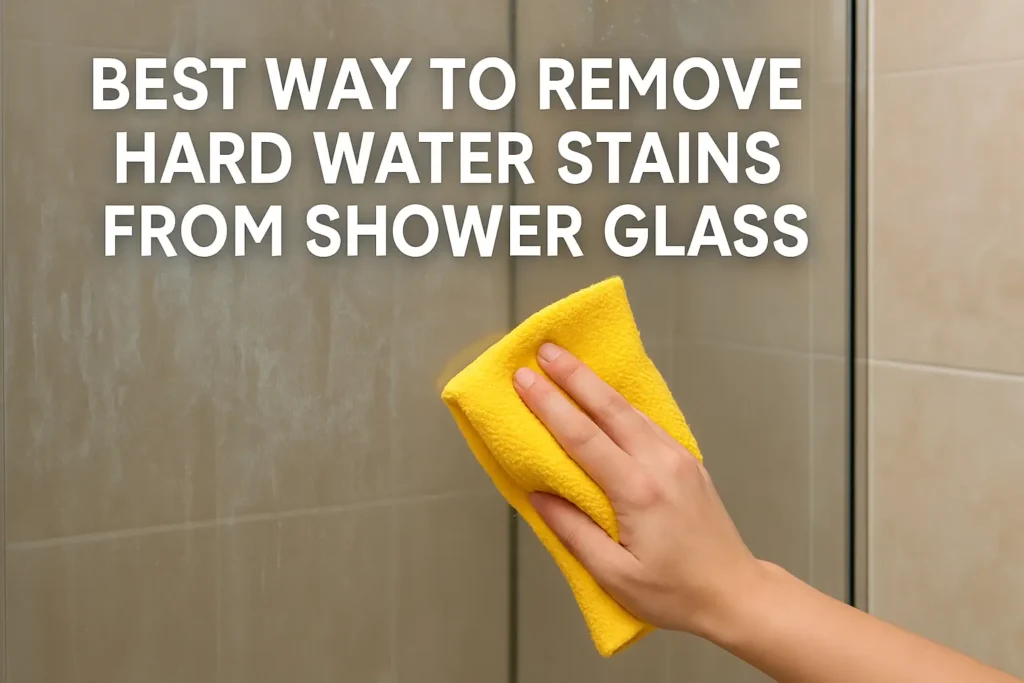
Hard water stains are mineral deposits left behind after water evaporates. When shower water contains high levels of calcium, magnesium, and sometimes iron, it leaves behind chalky or hazy white streaks that cling to glass.
Signs You’re Dealing with Hard Water Stains:
- Glass looks cloudy, dull, or streaky even after wiping.
- A white or sometimes yellowish crust forms around edges and corners.
- Soap and regular cleaners don’t remove the marks.
The longer stains sit, the harder they get. That’s why regular cleaning and prevention matter just as much as removing existing buildup.
Step-by-Step Guide: Best Way to Remove Hard Water Stains from Shower Glass
Let’s break it down into practical cleaning methods, starting from the gentlest natural solutions to stronger treatments if needed.
Step 1: Vinegar Spray (First-Line Solution)
Vinegar is often the easiest and safest starting point.
How to Use:
- Mix equal parts distilled white vinegar and warm water in a spray bottle.
- Spray generously over the glass, focusing on stained areas.
- Let sit for 10–15 minutes (for heavy stains, up to 30 minutes).
- Wipe with a microfiber cloth or non-abrasive sponge.
- Rinse with warm water and dry with a squeegee.
Why it Works: The mild acid in vinegar breaks down calcium and magnesium deposits naturally.
Step 2: Baking Soda Paste (For Stubborn Stains)
If vinegar alone doesn’t clear the stains, boost its cleaning power with baking soda.
How to Use:
- Mix 3 tablespoons of baking soda with a few drops of water to form a paste.
- Apply the paste directly to stained glass.
- Spray vinegar on top of the paste — it will fizz.
- Gently scrub in circular motions with a soft cloth or sponge.
- Rinse thoroughly and dry.
Why it Works: Baking soda adds gentle abrasion, while vinegar dissolves minerals. Together, they work as a natural stain remover.
Step 3: Lemon Juice (Natural Alternative with Fresh Scent)
Lemon juice contains citric acid, which is also excellent at dissolving mineral stains.
How to Use:
- Cut a lemon in half and rub it directly on the stained glass.
- Leave the juice for 5–10 minutes.
- Rinse and wipe dry.
Bonus Tip: Mix lemon juice with vinegar for extra cleaning strength.
Step 4: Commercial Hard Water Cleaners (When DIY Isn’t Enough)
If natural methods don’t fully remove stains — especially if they’ve built up for years — you may need a specialized cleaner.
Look for products labeled:
- “Calcium, Lime, and Rust Remover”
- “Lime Scale Cleaner”
- “Shower Glass Cleaner for Hard Water”
Safety Tips:
- Always wear gloves.
- Ventilate the bathroom.
- Test a small spot first.
Warning: Avoid abrasive powders or steel wool. They can scratch the glass permanently.
Step 5: Daily Maintenance to Prevent Stains Returning
Once you’ve cleaned the glass, keeping it clear is all about prevention.
Simple Daily Habits:
- Use a squeegee after every shower – takes 30 seconds but saves hours of scrubbing later.
- Wipe with a microfiber cloth to remove any leftover droplets.
- Leave the bathroom fan on or open a window to reduce humidity.
Extra Hacks for Long-Term Clarity
- Rain Repellent Spray: The same product used on car windshields can make water bead up and roll off your shower glass.
- Baby Oil or Mineral Oil: Apply a thin layer once a month to create a protective barrier.
- Shower Filters: Installing a filter reduces mineral content, preventing stains before they start.
- Weekly Vinegar Wipe: Even if your glass looks clean, a quick vinegar rinse once a week will keep minerals from hardening.
Deep Cleaning Schedule
Here’s a simple cleaning plan to keep stains away:
- After every shower: Quick squeegee + microfiber cloth dry.
- Weekly: Spray vinegar, wipe, and rinse.
- Monthly: Deep clean with baking soda paste or commercial cleaner if needed.
- Every 6 months: Reapply rain repellent or protective coating.
This routine ensures stains never build up again.
FAQs About Hard Water Stains on Shower Glass
1. Can vinegar damage shower glass?
No, vinegar is safe for glass. The only caution is with metal frames — don’t let vinegar sit too long, as it can corrode finishes.
2. How often should I clean shower glass?
Daily drying and a weekly vinegar rinse are enough for most bathrooms. If you live in a very hard water area, consider twice-weekly deep cleans.
3. What if stains are years old and extremely stubborn?
For very old stains, a commercial lime remover may be necessary. In extreme cases, glass replacement may be the only option.
4. Can I use bleach to clean shower glass?
No, bleach is not effective against mineral deposits. It may also damage silicone seals and emit harmful fumes.
5. What’s the best prevention method?
The most effective prevention is using a squeegee after each shower. Adding a shower filter also reduces mineral buildup dramatically.
Final Thoughts
Hard water stains may seem impossible to remove, but with the right approach, your shower glass can look brand new again.
The best way to remove hard water stains from shower glass is with a vinegar and baking soda combo. It’s natural, safe, and highly effective. For long-term clarity, pair it with simple habits like drying the glass after every shower.