How to Clean a Greasy Stove Fast
Introduction: Why does stove grease build up so quickly and how can you clean it fast?
Every home cook has faced this problem: after making a delicious meal, you look at the stove and it’s covered in grease splatters. The question is, “Why does grease stick so stubbornly, and how do I clean it fast?”
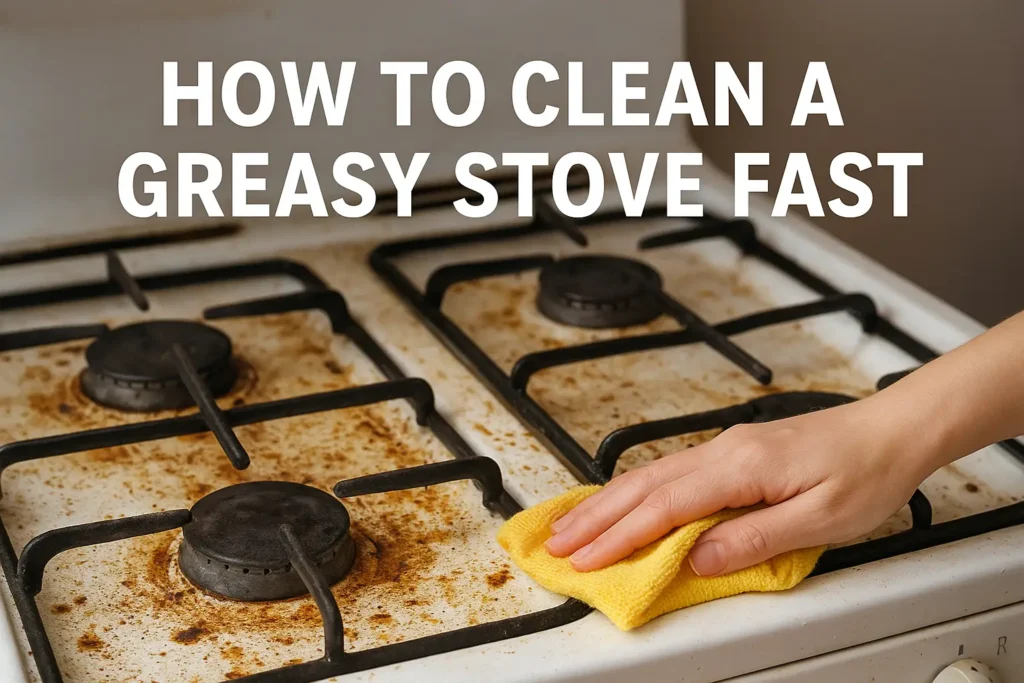
Grease builds up because cooking oils don’t evaporate — they splatter, cool down, and turn sticky. Over time, dust and food particles mix with the grease, making it even harder to remove. The good news is that you don’t need harsh chemicals or hours of scrubbing. With the right methods, you can clean a greasy stove in minutes.
This guide covers everything step by step, from light cleaning after dinner to removing weeks of stubborn grease buildup.
What supplies should you keep ready before cleaning a greasy stove?
Cleaning becomes faster when you gather your supplies in advance. For most grease-cleaning tasks, you’ll need:
- Dish soap: Grease-cutting formulas (like Dawn or Fairy) break down oil easily.
- Baking soda: A mild abrasive that lifts sticky, burnt-on grease.
- White vinegar: Natural degreaser and disinfectant.
- Warm water: Helps loosen oils and soften grease.
- Microfiber cloths: These trap grease better than paper towels.
- Soft scrub brush or old toothbrush: Perfect for corners and around burners.
- Paper towels: For quick wipes before deep cleaning.
- Optional commercial degreaser: Useful for very stubborn grease, but not always necessary.
Pro tip: Keep a small basket with these items under your sink so stove cleaning never feels like a big chore.
Why is removing stove parts the first step in fast cleaning?
Cleaning around burners and knobs with everything in place wastes time. That’s why experts recommend removing:
- Burner grates (gas stoves): These collect the most grease and can be soaked separately.
- Control knobs: Grease often drips down behind them.
- Drip pans (electric stoves): These trap oil and crumbs.
Place these parts in a basin of warm, soapy water. By the time you finish cleaning the stovetop surface, the grease on these parts will have loosened, making scrubbing much faster.
What is the fastest way to remove loose food and grease before deep cleaning?
The biggest mistake people make is spraying cleaners directly on a dirty stove. This spreads crumbs and makes grease harder to remove.
Here’s what to do instead:
- Use a dry paper towel or cloth to sweep away crumbs and excess oil.
- If there are liquid spills, blot them with a paper towel first.
- Now, you’ll be working only with the grease that actually needs attention.
This step takes less than 2 minutes but saves a lot of scrubbing later.
How does dish soap help with light grease stains?
Dish soap is designed for one purpose — breaking down oil. For fresh splatters or light grease:
- Mix a few drops of dish soap in a bowl of warm water.
- Dip a microfiber cloth or sponge in the solution.
- Scrub the greasy spots in small circles.
- Rinse with a clean, damp cloth to remove soap residue.
Daily wipe-down with dish soap prevents heavy grease buildup. If you cook every day, this method alone can keep your stove looking new.
How do you use baking soda for stubborn, stuck-on grease?
When grease has dried or burned onto the surface, baking soda is the hero.
Here’s the method:
- Sprinkle baking soda directly onto the greasy spots.
- Spray a little water (or vinegar) to make a paste.
- Leave it for 10–15 minutes.
- Scrub gently with a sponge or brush.
- Wipe with a damp microfiber cloth.
Baking soda works because it’s mildly abrasive but won’t scratch enamel or stainless steel surfaces.
Hack: For very thick grease, make a paste of 3 parts baking soda + 1 part water, spread it over the spot, cover with a damp cloth, and leave for 30 minutes before wiping.
Can vinegar really remove grease fast?
Yes, vinegar is one of the fastest natural degreasers. The acidity in vinegar breaks down oil, making it easy to wipe away.
Method:
- Fill a spray bottle with equal parts vinegar and warm water.
- Spray directly onto the greasy surface.
- Let it sit for 5 minutes.
- Wipe with a microfiber cloth.
Extra benefit: Vinegar kills bacteria and leaves your stove shiny.
For best results, use vinegar after scrubbing with baking soda. The fizzing reaction helps lift away any last traces of grease.
How should you clean stove knobs and grates effectively?
- Knobs: Remove and soak them in warm, soapy water. Use a toothbrush to scrub grease from the crevices. Dry completely before reattaching to avoid moisture damage.
- Grates (gas stoves): After soaking, scrub with baking soda paste for burnt spots. Rinse and dry before placing back.
- Drip pans (electric stoves): Cover in baking soda paste, leave for 15 minutes, then scrub. For stubborn grease, wrap in aluminum foil with baking soda paste inside and leave overnight.
What is the fastest method for cleaning a gas stove?
Gas stoves get greasy quickly, especially around the burners. To clean them fast:
- Remove grates and burner caps.
- Spray the surface with vinegar-water solution.
- Let sit for 5 minutes.
- Scrub around burners with a toothbrush.
- Wipe clean with a microfiber cloth.
- Dry and reassemble.
For stubborn grease near burners, apply baking soda paste and scrub gently.
How do you clean an electric stove quickly?
Coil-style electric stove:
- Remove drip pans and soak in warm soapy water.
- Wipe coils with a damp cloth (do not submerge them).
- Clean the stovetop surface with vinegar spray.
Glass-top stove:
- Sprinkle baking soda over greasy areas.
- Spray vinegar on top.
- Place a warm, damp cloth over the mixture for 10 minutes.
- Wipe away the loosened grease with a microfiber cloth.
Important: Always wait for the glass surface to cool before cleaning to avoid cracking.
How do you finish cleaning for a spotless stove?
Once grease is gone:
- Wipe the entire stove with a damp microfiber cloth.
- Dry with a clean towel to prevent streaks.
- Replace knobs, burners, and grates.
This last step gives your stove that fresh, polished look.
What are the best real-life hacks to prevent stove grease buildup?
- Clean spills immediately: Grease hardens the longer it sits.
- Use a splatter guard: Prevents oil from coating your stove while frying.
- Keep a vinegar spray bottle handy: Quick sprays after cooking keep grease from sticking.
- Line drip pans with foil: Simply replace the foil instead of scrubbing.
- Deep clean weekly: If you cook daily, a 10-minute deep clean once a week saves hours of scrubbing later.
FAQs About Cleaning a Greasy Stove
1. What is the fastest way to clean stove grease?
The fastest method is to spray vinegar-water solution, wait 5 minutes, and wipe with a microfiber cloth. For heavy grease, add baking soda before spraying.
2. How do you remove burnt-on grease from a stove?
Make a baking soda paste, spread it on the burnt area, leave for 15 minutes, and scrub with a brush. Repeat if needed.
3. Can commercial degreasers be used safely on stoves?
Yes, but always check your stove’s manual first. Natural options like vinegar and baking soda are safer and cheaper.
4. How often should you clean your stove?
Do a light wipe-down daily after cooking and a deeper clean once a week. This prevents heavy grease buildup.
5. Is vinegar safe for stainless steel and glass stoves?
Yes, vinegar is safe. Just don’t use abrasive pads on stainless steel or glass, as they can cause scratches.
Final Thoughts: How can you keep your stove grease-free long-term?
The secret to a clean stove isn’t hours of scrubbing — it’s consistency. If you wipe spills immediately and do a weekly deep clean, your stove will never develop stubborn grease. With simple ingredients like dish soap, baking soda, and vinegar, you can clean a greasy stove fast and keep your kitchen looking spotless.