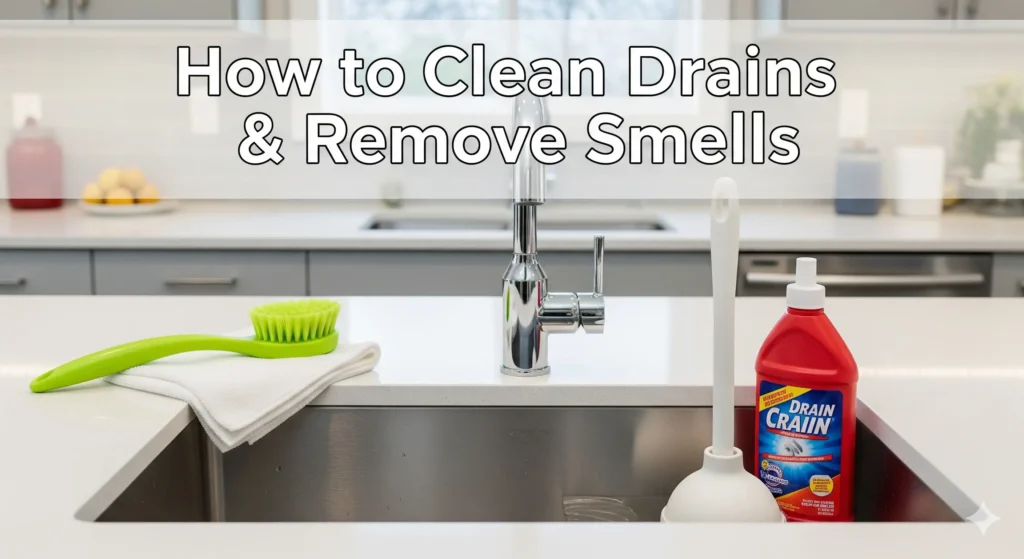
How to Clean Drains & Remove Smells
Ever noticed a foul smell coming from your kitchen or bathroom drain and wondered what’s causing it? The quick answer is: buildup of grease, food particles, hair, or soap scum inside the pipes can trap bacteria and create unpleasant odors. The good news—you don’t always need harsh chemicals or a plumber. With a few simple steps, you can clean drains and remove smells naturally at home.
This guide walks you step by step through how to clean drains, freshen them up, and keep them smelling great.
Why Do Drains Smell?
Before cleaning, it helps to know the common reasons behind smelly drains:
- Food buildup in kitchen sinks.
- Hair and soap scum in bathroom drains.
- Standing water that breeds bacteria.
- Grease and oil coating pipe walls.
- Dry P-traps when drains aren’t used often.
Understanding the cause makes it easier to fix the problem effectively.
Step-by-Step Guide: How to Clean Drains & Remove Smells
1. Flush With Hot Water
Boil a kettle or pot of water and carefully pour it down the drain. Hot water melts grease and loosens debris, making the next steps more effective.
Tip: For bathroom drains, run hot water for 2–3 minutes first to loosen soap residue.
2. Use Baking Soda and Vinegar
This classic natural cleaner works wonders:
- Pour ½ cup of baking soda into the drain.
- Follow with 1 cup of vinegar (white or apple cider).
- Let the mixture fizz for 15–20 minutes.
- Flush with hot water.
This reaction breaks down grime and neutralizes bad odors.
3. Try Salt and Hot Water
Salt is abrasive and helps scrub pipe walls.
- Pour ½ cup of salt into the drain.
- Flush with a kettle of boiling water.
This is especially useful in kitchen sinks where grease collects.
4. Use Lemon or Citrus Peels
Fresh citrus not only smells great but also helps clean.
- Drop a few lemon or orange peels into the garbage disposal (if you have one).
- Run cold water and switch on the disposal.
- For regular drains, squeeze lemon juice followed by hot water.
5. Clean the Drain Stopper
Sometimes the smell comes from buildup right at the top.
- Remove the drain stopper.
- Clean off hair, soap scum, or food debris.
- Wash with dish soap and a toothbrush before reinstalling.
6. Keep P-Traps Filled With Water
If a drain isn’t used often, the water in the P-trap evaporates, letting sewer gases escape.
- Simply run water for a minute once a week to keep the trap sealed.
7. Use a Drain Brush or Snake
If the odor persists, the buildup may be deeper.
- Insert a drain brush or snake into the pipe.
- Twist and pull out gunk.
- Rinse with hot water.
8. Prevent Future Smells
- Avoid pouring grease or oil down drains.
- Use drain strainers to catch food and hair.
- Do a monthly flush with baking soda and hot water.
- Keep garbage disposals fresh with ice cubes and lemon peels.
Practical Tips and Hacks
- For stubborn smells: Mix ½ cup of vinegar with ½ cup of lemon juice and pour down the drain.
- For floor drains: Sprinkle baking soda around the opening, let sit, and rinse.
- For garbage disposal clogs: Drop ice cubes and a handful of coarse salt, then run with cold water to clean blades.
FAQs About Cleaning Drains & Removing Smells
Q1: Can I use bleach to clean drains?
Yes, but it’s not always the best option. Bleach can kill bacteria but doesn’t remove buildup. Natural methods like baking soda and vinegar are safer for pipes.
Q2: How often should I clean drains?
Once a month is ideal for maintenance. If you notice slow draining or odors, clean immediately.
Q3: Why does my drain smell like rotten eggs?
That smell usually comes from hydrogen sulfide gas caused by bacteria. A dry P-trap or buildup in pipes is often the culprit.
Q4: Can professional cleaning be avoided with regular care?
Yes, regular cleaning prevents most issues. However, if odors persist despite cleaning, call a plumber.
Final Thoughts
Now you know exactly how to clean drains and remove smells using safe, simple methods. Regular maintenance with baking soda, vinegar, and hot water keeps drains fresh and prevents costly plumbing issues.