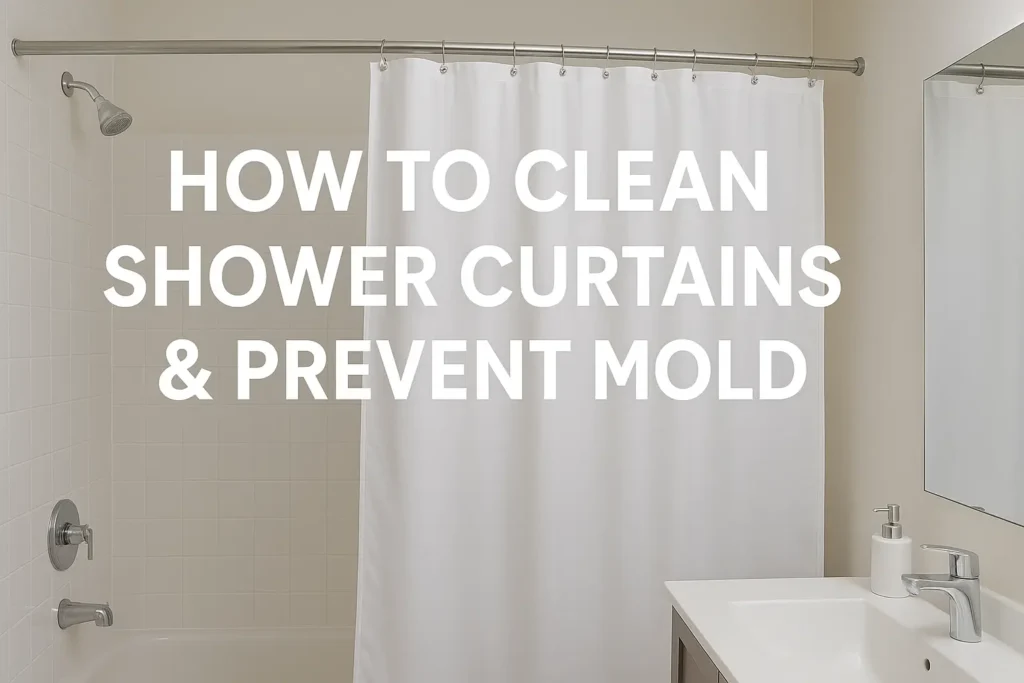
How to Clean Shower Curtains & Prevent Mold
Do your shower curtains often get moldy, smelly, or stained, and you’re unsure how to clean them?
The easiest way to clean shower curtains and prevent mold is by washing them with mild soap, vinegar, or baking soda and allowing them to dry completely. Regular cleaning every few weeks combined with simple prevention habits will keep your curtains fresh and mold-free.
In this guide, you’ll learn exactly how to clean shower curtains step-by-step, plus proven ways to prevent mold from coming back.
Why Shower Curtains Get Moldy
Shower curtains are constantly exposed to water, soap, shampoo, and humidity. Mold thrives in warm, damp places, making your bathroom an ideal environment. If the curtain stays wet for long periods or isn’t cleaned often, dark spots and unpleasant odors can develop quickly.
The good news is, you can stop this cycle with proper cleaning and simple maintenance.
Step-by-Step: How to Clean Shower Curtains
1. Remove the Curtain from the Rod
Take the shower curtain off the hooks. This makes it easier to clean thoroughly. You can wash it in a machine (if the fabric allows) or by hand.
2. Check the Care Label
Plastic, vinyl, polyester, or fabric curtains may have different washing instructions.
- Plastic/Vinyl: Hand wash or use gentle machine cycle.
- Polyester: Usually machine washable.
- Fabric (cotton, linen): Machine washable but may require delicate care.
3. Machine Washing Method
If the care label allows:
- Place the curtain in the washing machine with two towels (to scrub gently and balance the load).
- Add mild laundry detergent and ½ cup of baking soda.
- Wash on a gentle cycle with warm water.
- During the rinse cycle, add ½ cup of white vinegar.
- Once finished, hang the curtain back up to air-dry (never use a dryer for plastic curtains).
4. Hand Washing Method
If your curtain isn’t machine-safe:
- Lay it flat in the bathtub.
- Fill the tub with warm water and add 1 cup of white vinegar plus 1 tablespoon of mild detergent.
- Scrub with a soft sponge or cloth, focusing on moldy spots.
- Rinse thoroughly with clean water.
- Hang it up immediately to dry.
5. Spot-Cleaning Stubborn Mold
For areas with visible mold or mildew:
- Mix baking soda with water to make a paste.
- Apply it directly to the stains.
- Scrub gently with a soft brush.
- Rinse and dry.
For strong mold stains, hydrogen peroxide or diluted bleach (½ cup bleach in 1 gallon of water) can be used on white or clear curtains. Always rinse well afterward.
How to Prevent Mold on Shower Curtains
1. Keep the Curtain Spread Out
Always pull the curtain fully closed after showering. This allows air circulation and prevents water from pooling in folds.
2. Ventilate the Bathroom
Turn on the exhaust fan or open a window after every shower. Mold thrives in humidity, so good ventilation is key.
3. Shake Off Excess Water
After each shower, give the curtain a quick shake to remove water droplets.
4. Wash Regularly
Wash your shower curtain every 3–4 weeks, even if it looks clean. Regular maintenance prevents mold before it starts.
5. Use a Shower Liner
Plastic or vinyl liners protect fabric curtains from direct water exposure. They’re inexpensive and easy to replace when dirty.
6. Apply a Mold-Resistant Spray
Spraying your curtain occasionally with a solution of water and vinegar helps create a less favorable environment for mold growth.
Real-Life Hacks for Easier Maintenance
- Quick Refresh: Toss the curtain into the washing machine with towels once a month.
- No Washer? Wipe down the curtain with a vinegar-soaked cloth weekly.
- Odor Fix: Add a few drops of tea tree oil to cleaning water for natural deodorizing.
- Extra Protection: Keep a spare liner so you can swap it out when one is drying.
FAQs
1. Can I put a plastic shower curtain in the washing machine?
Yes, most plastic shower curtains can go in the machine on a gentle cycle with mild detergent and vinegar. Avoid using the dryer—always air-dry.
2. How often should I wash my shower curtain?
Every 3–4 weeks is best. If you notice mold or odors earlier, wash it immediately.
3. What is the best way to remove mold from shower curtains?
Scrub with baking soda paste or wash with vinegar and detergent. For stubborn stains on white curtains, diluted bleach can be used.
4. Should I replace a moldy shower curtain?
If mold stains don’t come out after cleaning, or if the curtain smells strongly of mildew, replacing it is more hygienic.
Final Thoughts
Now you know exactly how to clean shower curtains and prevent mold with simple, practical steps. By washing them regularly, keeping your bathroom ventilated, and using natural cleaning agents, you can keep your curtains looking fresh and lasting longer.