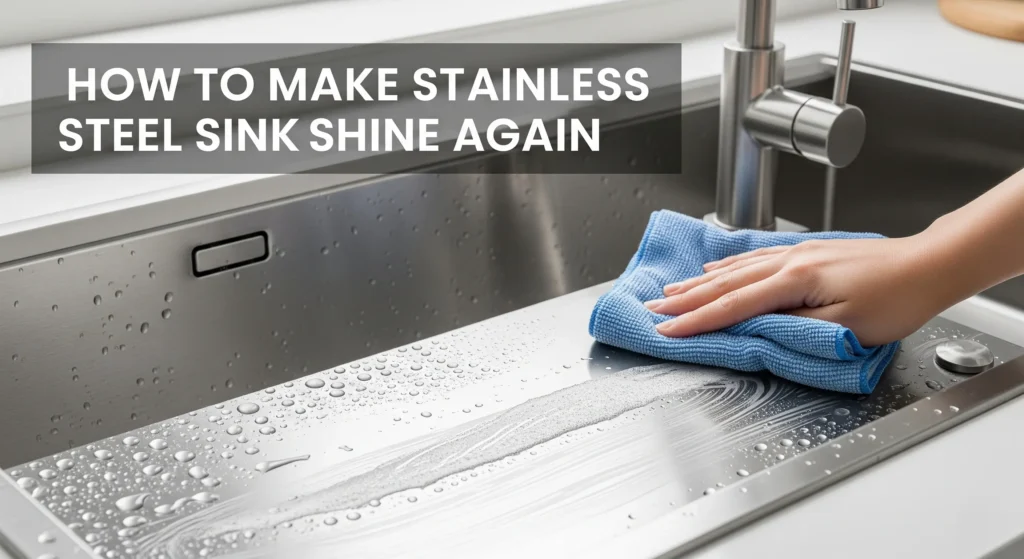
How to Make Stainless Steel Sink Shine Again
Ever wondered why your stainless steel sink looks dull even after regular cleaning? The good news is that you can make your stainless steel sink shine again with simple household items. The quickest way is to clean it with baking soda, rinse thoroughly, and finish with vinegar and a microfiber cloth for a streak-free shine.
In this guide, we’ll go step by step through effective cleaning methods, practical hacks, and pro tips that keep your stainless steel sink looking new.
Step 1: Clear and Rinse the Sink
Before polishing, start with a clean base.
- Remove any dishes, food scraps, or utensils.
- Rinse the sink with warm water to get rid of loose dirt and grease.
💡 Tip: Always rinse in the direction of the steel grain to avoid scratches.
Step 2: Scrub with Baking Soda
Baking soda is one of the best natural cleaners for stainless steel sinks.
- Sprinkle baking soda generously over the sink.
- Use a soft sponge or microfiber cloth to scrub in circular motions.
- Pay extra attention to stains, water spots, and edges around the drain.
Why baking soda? It gently scrubs away residue without scratching the surface.
Step 3: Rinse with Vinegar
Vinegar helps disinfect and adds shine.
- Spray white vinegar over the baking soda-coated sink.
- Let it fizz for 2–3 minutes.
- Rinse thoroughly with warm water.
This reaction removes mineral deposits and sanitizes at the same time.
Step 4: Dry and Polish
Water spots are the main reason stainless steel sinks lose their shine.
- Wipe the sink completely dry with a microfiber cloth.
- Buff in the direction of the steel grain until it gleams.
💡 Pro Tip: Avoid paper towels—they leave lint behind.
Step 5: Add Extra Shine with Olive Oil or Mineral Oil
For that showroom finish:
- Apply a few drops of olive oil or mineral oil to a clean cloth.
- Rub gently across the sink surface.
- Buff until the sink shines like new.
This trick also helps repel water and prevent future spots.
Step 6: Don’t Forget the Faucet and Edges
A shiny sink isn’t complete without a polished faucet.
- Use the same baking soda and vinegar method.
- For tough spots, use an old toothbrush.
- Dry and polish with a microfiber cloth.
Real-Life Hacks to Keep Your Sink Shiny Longer
- Rinse After Every Use: Prevents food stains and soap buildup.
- Dry Daily: Keeps water spots away.
- Use Dish Soap Weekly: A few drops of mild dish soap on a sponge refreshes the shine.
- Avoid Harsh Cleaners: No bleach, steel wool, or abrasive powders.
- Deodorize with Lemon: Rubbing a lemon slice removes odors and adds freshness.
Common Mistakes to Avoid
- Leaving standing water in the sink.
- Using abrasive scrubbers that scratch the surface.
- Ignoring the drain area and edges.
- Letting acidic foods (like tomatoes) sit for too long.
FAQs
Q1: How often should I clean my stainless steel sink to keep it shiny?
Ideally, rinse and wipe daily, with a deep clean once a week.
Q2: Can I use bleach on my stainless steel sink?
No, bleach can discolor and damage stainless steel. Stick to mild cleaners.
Q3: What’s the fastest way to make a dull sink shine again?
Sprinkle baking soda, spray vinegar, rinse, and polish with oil—all in under 10 minutes.
Q4: How do I remove stubborn water spots?
Use a paste of baking soda and water, scrub gently, then rinse with vinegar.
Q5: Will olive oil make my sink greasy?
No, just use a few drops and buff well—it leaves shine without residue.
Final Thoughts
Making your stainless steel sink shine again doesn’t require expensive products—just baking soda, vinegar, and a microfiber cloth. With a little routine care, your sink can stay bright and spotless for years.