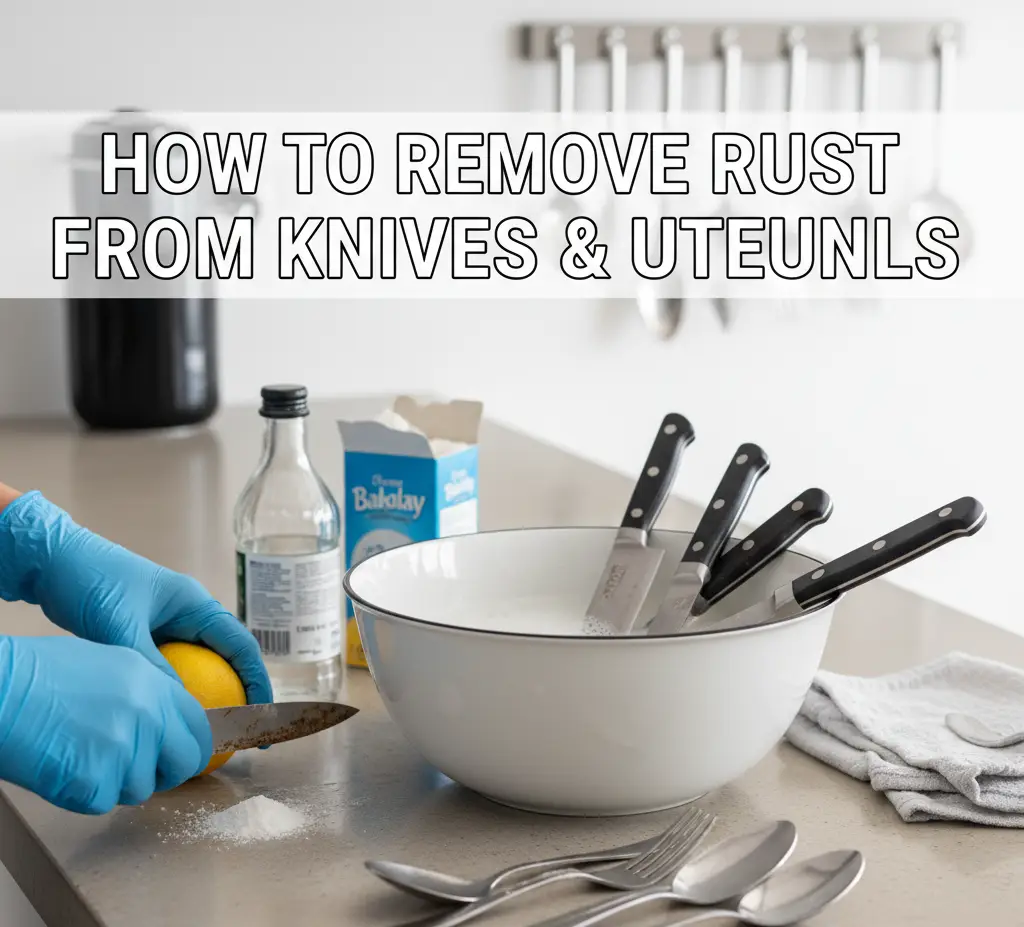
How to Remove Rust from Knives & Utensils
Introduction
Have you noticed brown spots forming on your knives or utensils and wondered if they are ruined? The good news is that you can remove rust from knives and utensils easily at home with simple methods. Rust is not permanent if addressed early, and with the right approach, you can restore your kitchen tools to a safe and shiny state.
This guide explains step-by-step how to remove rust, prevent future buildup, and care for your cutlery so it lasts for years.
Why Do Knives and Utensils Rust?
Before learning how to remove rust from knives and utensils, it’s helpful to understand why it happens:
- Moisture Exposure: Leaving utensils wet or storing them in damp places encourages rust.
- Dishwasher Use: Harsh detergents and high heat may wear protective coatings.
- Low-Quality Steel: Not all stainless steel is equally resistant to rust.
- Food Acids: Citrus, vinegar, and tomato residue can corrode metal if not cleaned promptly.
Step-by-Step Guide: How to Remove Rust from Knives & Utensils
1. Clean the Surface First
- Wash the knife or utensil with mild dish soap and warm water.
- Dry thoroughly with a towel before applying any rust removal method.
2. Baking Soda Paste Method (Best for Light Rust)
- Mix 3 tablespoons of baking soda with a few drops of water until it forms a paste.
- Apply the paste to the rusty spots.
- Scrub gently using a toothbrush or a soft sponge.
- Rinse and dry immediately.
Tip: For tougher spots, sprinkle dry baking soda directly and scrub with a damp sponge.
3. Vinegar Soak (For Medium Rust)
- Fill a bowl with white vinegar.
- Submerge the rusty knife or utensil for 15–30 minutes.
- Remove and scrub with a scrub pad or brush.
- Wash with soap, rinse, and dry completely.
Note: Do not soak longer than 30 minutes, as vinegar may damage the steel.
4. Lemon and Salt Scrub (Natural DIY Option)
- Sprinkle coarse salt on the rusty area.
- Cut a lemon in half and use it to scrub the surface.
- Let it sit for 10 minutes.
- Rinse thoroughly and dry with a soft cloth.
5. Potato and Baking Soda Trick
- Insert the rusty knife blade into a raw potato.
- Leave it for 1–2 hours.
- Remove, then scrub with baking soda paste.
- Rinse and dry.
Why it works: Potatoes contain oxalic acid, which naturally reacts with rust.
6. Use a Rust Eraser or Fine Steel Wool (For Stubborn Rust)
- Choose fine-grade steel wool (0000 grit) or a purpose-made rust eraser.
- Rub gently in the direction of the blade grain.
- Rinse with warm water and dry carefully.
Extra Care Tips After Rust Removal
- Always dry knives and utensils immediately after washing.
- Store them in a dry drawer or knife block, not in damp conditions.
- Apply a thin layer of food-safe mineral oil to blades for long-term protection.
- Hand wash instead of dishwashing to prevent damage.
How to Prevent Rust on Knives & Utensils
- Regular Cleaning: Wash immediately after use.
- Avoid Soaking: Don’t leave utensils in water overnight.
- Dry Storage: Keep them in a drawer lined with cloth or a knife block.
- Occasional Oiling: A drop of food-safe oil every month keeps blades protected.
FAQs on How to Remove Rust from Knives & Utensils
1. Is it safe to use a knife after removing rust?
Yes. As long as the rust is completely cleaned off and the blade is washed thoroughly, it is safe for food preparation.
2. Can I remove rust with WD-40 or chemicals?
It’s not recommended for utensils used with food. Stick to food-safe options like vinegar, baking soda, and lemon.
3. How often should I oil my knives?
For knives used daily, apply a light coat of food-safe oil once a month. For occasional use, oil them every 2–3 months.
4. Does stainless steel rust?
Yes. “Stainless” means resistant to rust, not rust-proof. Poor maintenance and moisture can still cause rust spots.
Final Thoughts
Now that you know how to remove rust from knives and utensils, you can keep your kitchen tools clean, safe, and long-lasting. With simple household items like baking soda, vinegar, and lemon, rust doesn’t stand a chance.